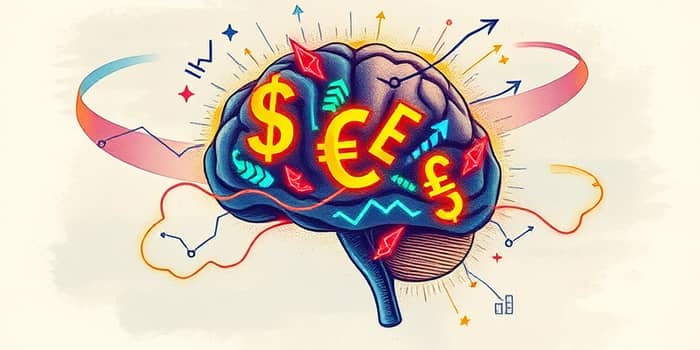
Every time you make an investment decision, your brain is hard at work—but not always making the optimal choice. Deep-rooted psychological patterns can lead even seasoned investors astray, costing time, money, and confidence. In this comprehensive exploration, we dive into the world of cognitive biases, examine groundbreaking research, and offer actionable strategies to help you regain control over your financial decisions.
Cognitive bias refers to a systematic error in thinking that affects the decisions and judgments that people make. In the realm of finance, these mental shortcuts can distort perception, leading to irrational decisions leading to losses and missed opportunities.
Behavioral finance theory shows that when individuals rely on heuristics—simple rules of thumb—they may deviate from purely rational behavior. While these shortcuts can speed up decision-making, they often introduce predictable mistakes that can compound over time.
Understanding these biases is the first step toward mitigating their impact. By recognizing the invisible forces shaping our choices, we can develop strategies to counteract unhelpful patterns and make more informed decisions.
This section highlights five of the most influential biases that routinely affect investors and everyday savers alike.
A landmark global study in 2023 surveyed nearly 5,000 participants across 27 countries, including 1,458 low-income adults and positive deviants—individuals who overcame early disadvantages to achieve strong financial health. Participants exhibited an average of 3.23 biases each, with rates ranging from 28.2% (temporal discounting) to 70% (ambiguity effect).
Surprisingly, positive deviants and low-income individuals showed no significant differences in bias prevalence. This reveals that resistance to cognitive biases is not the sole driver of financial success. Contextual factors, structural barriers, and environmental pressures play equally crucial roles.
The study’s critical conclusion emphasizes the necessity to combine behavioral and structural interventions in policy making. Addressing biases alone cannot bridge the gap in economic mobility without tackling systemic inequities.
While cognitive biases skew individual choices, external forces often dictate outcomes more powerfully. Economic scarcity, environmental constraints, and policy frameworks all shape financial trajectories, regardless of personal decision quality.
Low-income households face higher transactional costs and narrower safety margins. Under these conditions, even sound financial moves can have disparate effects compared to those with greater resources. Broader systemic reforms are essential to create equitable opportunities for growth.
By institutionalizing these habits, you create safeguards against common cognitive pitfalls. The goal is not to eliminate intuition but to balance it with disciplined analysis.
Efforts to reduce financial inequality must integrate both behavioral insights and structural reforms. Educating individuals about biases is valuable, but without parallel changes in regulation, access to services, and community support, the benefits remain limited.
Future research should explore how preferences form and how biases influence daily budgeting and saving decisions. Unraveling these dynamics will inform more nuanced interventions and foster sustainable financial well-being.
Ultimately, our economic systems—and our individual finances—flourish when we combine evidence-based understanding of biases with robust institutional support. By illuminating the hidden forces in our minds and reshaping the contexts in which we operate, we can create a healthier, more equitable financial landscape for all.
As you reflect on your next financial move, remember that awareness is empowerment. Recognize the subtle pulls of cognitive bias, implement proven strategies to counteract them, and advocate for policies that support broad-based success. In doing so, you’ll harness your brain’s incredible potential rather than succumb to its hidden traps.
References