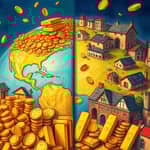
In a world where wealth often seems concentrated among a select few, unlocking genuine financial freedom can feel like scaling an insurmountable peak. Yet with the right knowledge, strategies, and mindset, anyone can begin to reshape their financial destiny. This article dives into the current global wealth dynamics, explores the roots of inequality, highlights the power of economic freedom, and equips you with robust, actionable tactics to build sustainable prosperity.
By 2026, there are over 80 million millionaires worldwide, led by the United States with more than 24 million individuals crossing the millionaire threshold. Asia-Pacific and the Americas trail closely behind in total wealth accumulation, underscoring the sheer scale of resources concentrated in the hands of a relatively small global elite.
These affluent groups collectively control 46% of global wealth, a stark reminder of the gap between top-tier asset holders and the average adult. Regions like Eastern Europe have demonstrated rapid growth—over 12% in wealth gains—while parts of Latin America and Oceania experienced declines in the same period.
Despite overall growth in global wealth, the distribution remains profoundly uneven. The wealthiest 1% captured more than 20% of global income in 2025, while the bottom half of humanity owns a fraction of total assets. Such extremes not only strain social cohesion but also stifle widespread economic mobility.
When just 26 billionaires own $2.87 trillion—wealth exceeding the GDP of many nations—it becomes imperative to question how financial systems can be rebalanced and made more inclusive.
Economic freedom—the ease of doing business, protection of property rights, and transparent governance—directly correlates with higher average incomes. Countries scoring in the "free" or "mostly free" categories report per capita incomes double the global average, while repressed economies lag far behind.
For individuals, this translates to clearer opportunities for entrepreneurship, investment, and wealth accumulation, provided the right policies and institutions support personal initiative.
Despite headline figures highlighting inherited fortunes, most self-made millionaires started from modest beginnings. Research shows that self-made wealth through multiple streams of income underpins long-term stability, whether through business ventures, investments, or side enterprises.
One guiding principle for retirement planning and sustainable living is the rule of 25 annual expenses, which recommends accumulating a portfolio worth 25 times your yearly cost of living. This benchmark helps individuals set clear savings targets and project their path to financial independence.
Armed with awareness of global trends and time-tested wealth-building principles, you can embark on a step-by-step journey toward greater financial security. These strategies are designed to be practical, scalable, and adaptable to changing economic conditions.
Building wealth is not a sprint but a marathon. Economic landscapes shift, policies change, and market cycles ebb and flow. Maintaining momentum requires regular review of your goals, adapting your allocation, and staying informed about emerging trends.
Embrace lifelong learning: subscribe to reputable financial publications, consult with trusted advisors, and adjust your plan as life circumstances evolve. By combining disciplined habits with an adaptive mindset, you can transform the ideal of financial freedom from a distant dream into an attainable reality.
References