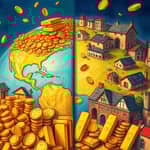
Gross Domestic Product, or GDP, is more than a statistic—it is the monetary measure of total market value that policymakers, businesses, and citizens use to gauge a nation’s economic vitality. By tracking the value of all final goods and services produced within a country’s borders, GDP offers a window into overall economic activity. However, to harness its full potential, we must look beyond headline numbers and appreciate its nuances, strengths, and limitations.
At its core, GDP represents the sum of economic output over a specific period, typically a quarter or year. It acts as the primary indicator of economic size and is calculated using three equivalent approaches, each offering unique insights:
By understanding these methods, analysts can cross-verify data and ensure consistency. The expenditure approach, for instance, highlights demand drivers, while the income approach sheds light on distribution of earnings.
Not all GDP figures are created equal. Adjustments and variants help tailor the metric to different purposes, from comparing countries to assessing living standards.
Each variant offers a lens: nominal figures for market size, real GDP for growth trends, and per capita measures for individual well-being.
Rising GDP is often equated with prosperity: businesses expand, hiring increases, and consumer confidence strengthens. When a nation records positive real GDP growth, it typically signals rising production and employment opportunities. Conversely, falling GDP may herald recessions, prompting policymakers to act.
Examples abound: between 2001 and 2021, U.S. national GDP climbed 45.4%, yet regional disparities were striking—San Francisco soared by 87.4%, while New Orleans dipped by 5.2%. These contrasts remind us that aggregate growth may mask local realities.
GDP’s power lies in its standardization and comprehensiveness. It:
Policymakers rely on quarterly GDP reports to set interest rates, allocate budgets, and design stimulus packages. Business leaders use growth forecasts to plan investments and hiring strategies. Even non-profit organizations consult GDP data when allocating resources for development projects.
Despite its ubiquity, GDP has well-known shortcomings. It focuses solely on market transactions and often excludes non-market activities and well-being. Key limitations include:
Studies show that GDP explains only about 20% of variations in life satisfaction indicators across OECD countries. High health expenditures may boost GDP without guaranteeing better population health. Thus, treating GDP as a proxy for well-being can mislead policymakers and citizens alike.
To capture a broader picture of prosperity, experts advocate pairing GDP with complementary indicators. These include:
By integrating these metrics, nations can monitor not just economic output but also social progress, environmental sustainability, and health outcomes. This alternative measures for holistic assessment approach empowers policymakers to craft balanced strategies that promote both growth and well-being.
For businesses, understanding GDP trends helps align production with anticipated demand. Entrepreneurs can identify emerging markets by analyzing growth rates and consumer spending patterns. Investors use GDP forecasts to time market entries and manage risk.
At the community level, civic leaders can advocate for policies that address disparities revealed by GDP data—targeting regions with stagnant growth or low per capita income. Combining GDP insights with social indicators allows for more equitable resource allocation.
GDP remains the global economic pulse, essential for measuring output, guiding policy, and informing strategies. Yet, it is not a substitute for understanding quality of life, equity, and sustainability. By using GDP alongside well-being indicators, we unlock a richer narrative of progress—one that balances economic performance with human flourishing. Ultimately, a nuanced view of GDP empowers us to build societies that thrive in both wealth and welfare.
References