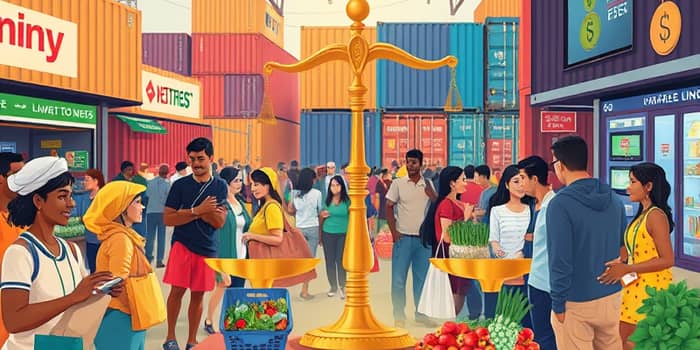
As global tensions spill into our daily lives, shoppers face sticker shock at every checkout. Understanding the mechanisms behind tariffs can empower you to adapt and thrive.
At its core, a trade war unfolds when nations impose taxes on imports to protect domestic industries. Governments levy tariffs to make foreign products more expensive, hoping to encourage local production. Yet these measures often act as a tax on everyday shopping, with importers passing the added costs directly to consumers.
Economists estimate that up to 95% of domestic-borne costs from tariffs are funneled into higher U.S. consumer prices. As supply chains buckle under escalating duties, families see fewer choices and steeper bills on groceries, gadgets, and beyond.
On April 2, 2025, President Trump declared a broad sweep of import duties—dubbed “liberation day”—targeting nearly every trading partner to shrink U.S. deficits. Steel and aluminum levies alone generated $7.79 billion in revenue, up from $1.6 billion the previous year.
Early moves triggered front-loading of shipments and legal challenges that muted short-term upheaval. Yet start-and-stop enforcement and uneven exemptions sowed uncertainty, setting the stage for deeper consumer impacts in the months ahead.
Tariffs rarely bite immediately. Like a delayed storm, their true force arrives 12 to 18 months later—mid- to late-2026 in this case. Analysts warn of an additional 10% “Greenland tariff” on key European imports if U.S. acquisition talks stall, potentially adding $50 billion in monthly revenue.
Even if some rates face legal hurdles, alternative remedies and creative enforcement could sustain high duties for years. That means more pressure on household budgets as sticker prices climb steadily.
From your morning coffee to the phone in your hand, tariffs touch every aisle.
Processed foods like chocolate and olive oil face sharper hikes, hitting value-conscious shoppers hardest. Meanwhile, telecom expansions slow under rising hardware costs, and farmers grapple with pricier inputs.
Multiple studies—from the Kiel Institut to Harvard Business School—confirm that most tariffs function as hidden taxes. Importers and foreign exporters may initially absorb a fraction of costs, but U.S. consumers shoulder nearly the entire burden.
Low-income households—relying on thin-margin goods—feel the squeeze first. As promotional discounts vanish and shrinkflation spreads, families must stretch every dollar further.
While tariffs loom large, you can reclaim control through smart choices and community efforts. Adopt these practical steps to minimize pain at the pump and grocery line:
By pooling resources with neighbors, you can access better prices and share tips on new products. Community gardens and co-ops also foster resilience against quiet inflation.
Retailers and brands have launched absorption tactics across product lines, spreading costs to avoid sticker shocks. Smaller producers often lobby for exemptions, while giants rewire supply chains toward Southeast Asia or domestic plants.
Tech companies, buoyed by surging AI demand, offset some setbacks. Yet logistics costs are up 10–15%, and global stock jitters remind us that no sector is immune.
Though tariffs stir anxiety, they can spark innovation. U.S. manufacturers energized by protective measures may invest in automation and green technologies. Brands that highlight quality and sustainability can win consumer loyalty despite higher price tags.
Staying informed—through news outlets, policy briefings, or local advocacy groups—lets you seize early-warning signals and act swiftly. By supporting responsible businesses and community initiatives, you bolster collective resilience.
In times of challenge, smart shoppers become savvy navigators. Armed with knowledge and community, you can weather tariff-driven price surges and emerge stronger. Remember: every purchase is a vote for the future you want.
References