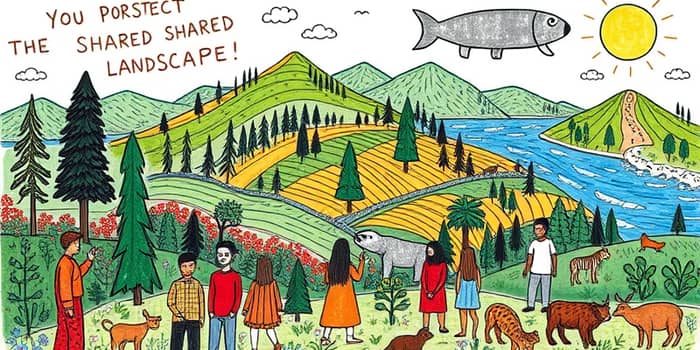
The Tragedy of the Commons is a powerful metaphor that captures how individuals, acting in rational self-interest, can overexploit a shared finite resource. Coined by William Forster Lloyd in 1833 and popularized by ecologist Garrett Hardin in 1968, the concept warns that without proper oversight, communal assets will inevitably degrade. From traditional grazing lands to the modern digital sphere, this dilemma permeates countless aspects of human interaction, urging us to consider sustainable alternatives.
Today, the stakes are higher than ever. Climate change, biodiversity loss, and water scarcity underscore the urgency of rethinking how we manage global commons—such as the atmosphere, oceans, and cyberspace. By exploring historical precedents alongside contemporary examples, we can identify strategies that balance personal incentives with collective well-being, inspiring action that preserves vital resources for future generations.
At its core, the Tragedy of the Commons describes a scenario where an open-access resource is both rival in consumption and non-excludable. Rivalry means consumption by one individual diminishes availability to others, while non-excludability prevents any group from blocking access. Together, these features create a potent mix for overuse and depletion.
Lloyd’s original thought experiment involved a shared pasture where each herder gains by adding more animals, but the combined grazing load eventually overwhelms the land. Decades later, Hardin reframed this predicament to advocate for formal restrictions, suggesting that only property rights or stringent regulations could avert collective ruin.
While Hardin’s arguments sparked widespread debate, later scholars have emphasized that unmanaged commons are not always doomed. Research into historical European pastures, irrigation systems, and communal forests reveals nuanced governance models where local users enforced rules through customary sanctions and negotiated access schedules.
Understanding why commons resources succumb to overuse requires examining two fundamental traits:
These attributes lead to misaligned incentives and shared costs, where short-term individual gains eclipse long-term communal interests. Without intervention, exhaustion becomes inevitable, leaving communities to bear the consequences of degraded landscapes and depleted stocks.
Across history, the Tragedy of the Commons has manifested in diverse forms. Environmental case studies often dominate the discourse, but social and technological commons also face similar pressures. Real-world scenarios illustrate the breadth and depth of the challenge:
Ocean fisheries provide striking examples. The collapse of Grand Banks cod in the late 20th century followed decades of intensive harvesting, despite early warnings. International bluefin tuna populations crashed under competing national fleets until multilateral quotas aimed to stabilize stocks.
On land, agricultural overgrazing has caused desertification in arid regions, while deforestation in the Amazon continues as farmers clear rainforests for short-term profit, disregarding long-term carbon and biodiversity losses. Marine plastic accumulation in ocean gyres exemplifies how individual mismanagement aggregates into global pollution crises.
These instances underscore how shared environments and systems, whether natural or constructed, can be pushed past tipping points when individual decisions lack coordination.
The Tragedy of the Commons parallels the Prisoner’s Dilemma but involves more participants and typically spans longer timeframes. Each actor seeks to maximize personal benefit—whether harvesting fish, grazing livestock, or hoarding groceries—while diffusing the cost of depletion across the group.
From an economic standpoint, the problem hinges on externalities and private versus social optima. Without mechanisms to internalize external costs, unregulated users extract until marginal benefit equals marginal cost, disregarding cumulative harm. This interaction leads to a non-cooperative Nash equilibrium, where no single actor can unilaterally improve the outcome without broader systemic change.
Preventing resource collapse demands creative governance and empowered communities. Effective measures often combine legal mandates with localized stewardship, reflecting the principle that coordinated action yields sustainable outcomes.
When integrated thoughtfully—combining top-down policies with bottom-up engagement—these approaches can restore and maintain resources, from clean waterways to healthy forests.
Although Hardin’s narrative fueled environmental movements, subsequent research revealed that not all commons are destined for tragedy. Historical case studies in Spain, Nepal, and parts of Africa demonstrate complex local governance, where users developed rotation systems, clearing rules, and penalty schemes that balanced use with regeneration.
Critics also highlight potential drawbacks of privatization, such as social displacement and inequality. The Inclosure Acts in England, for example, centralized land ownership but marginalized rural poor. Modern policy should therefore blend efficiency with equity, ensuring that conservation efforts respect cultural contexts and protect vulnerable communities.
The path ahead requires bridging local customs with global frameworks. Through shared stewardship of vital common resources, communities can harness technology, indigenous knowledge, and legal innovation to safeguard environments and systems.
Practical steps include adopting transparent monitoring tools, investing in education about resource limits, and cultivating a culture that values cooperation over competition. By reframing individual choices as part of a broader social contract, we can avert tragedy and build resilient commons that thrive for generations.
References