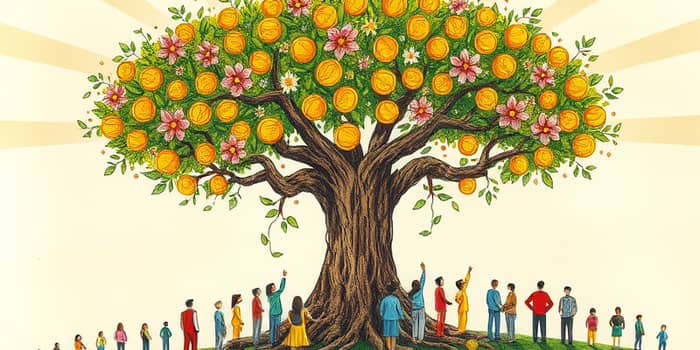
We live in an age where economic indices soar and material comforts multiply, yet satisfaction often remains elusive. Understanding the hidden costs of affluence can guide us toward a more balanced life.
What happens when more money fails to make us happier? The prosperity paradox reveals that wealth, instead of producing contentment, may spark rising aspirations, deeper inequalities, and social tensions.
Nearly 80% of Americans believe that more money would make them happier, yet surveys show a threshold beyond which additional income adds little joy. This is the Easterlin Paradox: people adapt to new incomes, quickly normalizing former luxuries.
Researchers find that while an increase from $0 to $30,000 yearly has a profound positive effect on happiness, once basic needs are met, each additional dollar buys diminishing returns. Even millionaires admit to perpetual yearning: only 13% of U.S. millionaires feel genuinely wealthy.
As income grows, so do expectations. This “moving goalposts” effect ensures satisfaction remains out of reach. The average American now estimates needing $1.46 million to retire comfortably, while high-net-worth individuals cite $4 million.
People tend to spend what they earn, maintaining a cycle of desire: “The more money we accumulate, the more money we think we need.” Without conscious adjustment, even generous raises can feel like mere maintenance.
Numbers can clarify this phenomenon:
We assume that rising wealth will foster inclusivity. Instead, relative deprivation can harden attitudes toward minorities. In affluent societies, status competition shifts from material needs to power, identity, and influence.
Studies show that as communities become wealthier, scarcity shifts to new domains. The affluent may perceive themselves at a disadvantage, fueling resentment and intolerance despite material abundance.
Global projections suggest that by 2050, extreme poverty under $2.15 per day could vanish. Yet ending poverty is not the same as creating sustainable prosperity. Simply providing aid can foster dependency, not empowerment.
As Clayton Christensen and colleagues assert, “The end of poverty is not the same thing as – and certainly does not signal – the beginning of prosperity.” We must cultivate innovation, market agencies, and local entrepreneurship to build resilience.
Despite these paradoxes, we have reasons for optimism. Health, literacy, and global cooperation continue to progress. Human minds, as Julian Simon argued, are the ultimate resource.
“We are becoming healthier, cleaner, smarter,” notes Kevin Kelly. Technologies can amplify our abilities, but only if paired with wise governance and ethical frameworks. Innovation alone cannot erase envy or guarantee equitable distribution.
Embracing a more holistic vision of wealth begins with intentional action. Consider these strategies:
Wealth alone cannot deliver lasting fulfillment. True prosperity intertwines financial security with purpose, relationships, and community. By recognizing the prosperity paradox, we take the first step in redefining what it means to thrive.
Let us shift from chasing limitless growth to nurturing balanced, sustainable well-being. In doing so, we can transform economic success into genuine human flourishing.
References