The Green Revolution transformed global agriculture between the 1940s and 1980s, rescuing millions from hunger and reshaping rural economies. Today, as climate change threatens crop security, we stand at a crossroads. We must build on past achievements while embracing climate-smart practices that ensure productivity, equity, and environmental health for future generations.
In the aftermath of World War II, agricultural scientists pursued breakthroughs to avert global famines. Norman Borlaug and his colleagues developed dwarf, high-yield wheat strains and partnered with governments to deploy modern methods. Within decades, nations like Mexico and India achieved self-sufficiency in staple grains.
These components combined to deliver dramatically increased crop yields, with cereal production rising by 150% from 1961 to 2008 despite a doubling global population. By optimizing inputs for singular crops, the Revolution set a new benchmark for food security.
The original Green Revolution averted starvation and catalyzed economic growth in Asia and Latin America. Farmers saw incomes rise, rural poverty declined, and food prices fell. Yet intensive practices also unleashed unintended consequences.
Social disparities grew as smallholder farmers struggled to afford rising input costs, often selling land to wealthier operations. Diets narrowed toward a few high-yield staples, reducing access to nutrient-rich indigenous foods. The reliance on fossil fuels for fertilizer production and machinery also locked agriculture into high greenhouse gas emissions.
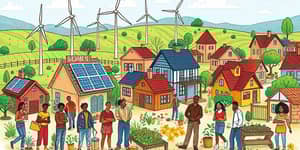
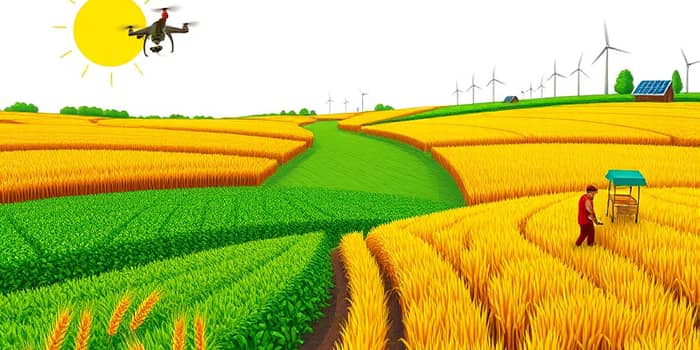
As extreme weather and soil degradation intensify, a new revolution is emerging—one that prioritizes sustainability alongside productivity. By leveraging innovative regenerative agroecology techniques, stakeholders can forge resilient and equitable food systems that mitigate emissions and conserve resources.
These strategies not only lower input costs over time but also create carbon sequestration opportunities and markets for soil carbon credits. By shifting from intensive monocultures to dynamic, diversified systems, we can reduce greenhouse gas emissions while sustaining yield growth.
Farmers, policymakers, investors, and communities each play a pivotal role in driving a climate-adaptive agricultural paradigm. For producers, transitioning to crop rotations and cover cropping builds long-term resilience. Governments can incentivize carbon farming through subsidies and payment schemes, aligning public policy with sustainability goals. Investors and agribusinesses have the opportunity to fund precision irrigation, renewable energy installations, and research on climate-smart genetics. Local cooperatives and NGOs can facilitate knowledge sharing and capacity building, ensuring smallholders access the resources they need.
Emphasizing collaboration across scales—from field trials to international partnerships—unlocks synergies that amplify impact. By valuing ecosystem services and rewarding regenerative practices, markets can evolve to recognize the true cost and benefit of food production.
Learning from the original Green Revolution’s successes and shortcomings, we can chart a course toward systems that nourish people and the planet. This requires a holistic vision that embeds social equity, financial viability, and ecological stewardship at its core. Each stakeholder must commit to innovation guided by science and ethics.
As we capitalize on climate solutions in agriculture, we honor the legacy of pioneers like Norman Borlaug while correcting course where technology alone fell short. By fostering diversity—in crops, practices, and partnerships—we ensure that future harvests are abundant, sustainable, and accessible to all.
References