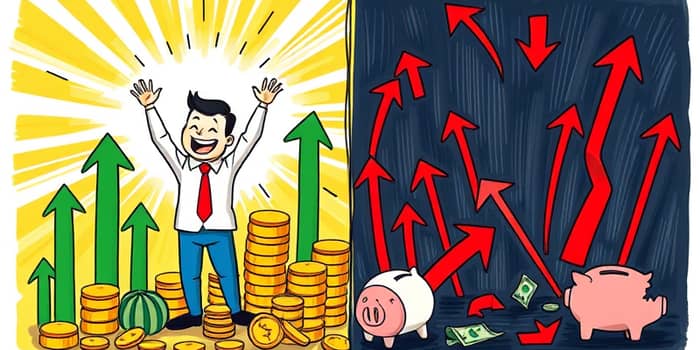
In the fast-paced world of investing, emotions frequently dictate actions, leading to costly errors that erode wealth over time. Common investing mistakes such as chasing market highs or panic selling during lows are often symptoms of a deeper psychological bias.
This bias is known as the empathy gap, where individuals struggle to predict or comprehend behavior under different emotional states. Irrational decisions driven by fear or greed highlight its pervasive influence in financial markets.
By mastering the empathy gap, you can decode the seemingly chaotic moves of other investors and safeguard your investments. Empathy gap insights provide a strategic advantage, turning emotional volatility into opportunities for growth.
The empathy gap is a cognitive bias rooted in behavioral finance, first popularized by experts like James Montier. It describes our inability to accurately anticipate how emotions will affect our own or others' decisions.
Montier likens it to grocery shopping on an empty stomach, where hunger overrides a carefully planned list. In investing, this means rational strategies are abandoned during emotional peaks or troughs.
Emotional overrides during market euphoria or fear lead to poor outcomes, such as buying at the top or selling at the bottom. Recognizing this gap is the first step toward mitigating its effects.
These gaps collectively fuel most trading errors, making markets appear irrational when driven by sentiment. They explain why investors often act against their best interests.
Empathy gaps are not theoretical; they manifest in tangible market behaviors that impact portfolio performance. Investors frequently succumb to emotional surges, leading to predictable patterns of loss.
During bull markets, euphoria can cloud judgment, causing investors to ignore sell signals. Bull market euphoria results in buying assets at inflated prices, only to suffer when corrections occur.
In bear markets, fear induces paralysis, preventing opportunities to buy undervalued stocks. Bear market fear locks in losses and misses potential recoveries, perpetuating a cycle of disappointment.
Historical events vividly illustrate these manifestations. The table below summarizes key examples where empathy gaps played a critical role.
These examples underscore how perpetual disappointment arises from emotional missteps. By studying them, investors can learn to avoid similar pitfalls.
At its psychological core, the empathy gap stems from a conflict between two brain systems: the rational C-system and the emotional X-system. During stressful times, the X-system dominates, impairing decision-making.
This battle explains why investors often abandon well-laid plans in volatile markets. It links to broader cognitive biases that influence financial behavior.
Markets do not accommodate these psychological foibles; they penalize emotional decisions harshly. Understanding these drivers helps investors prepare for emotional challenges.
C-system vs. X-system awareness empowers individuals to recognize when emotions are taking over. This knowledge is crucial for maintaining discipline in turbulent times.
Overcoming the empathy gap requires proactive and systematic approaches. The core strategy is to prepare, plan, and pre-commit during calm, rational states to avoid emotional overrides.
Begin by defining clear investment goals, timelines, and risk tolerance levels. Create a detailed investment policy that serves as a playbook for navigating uncertainty.
Historical figures like Sir John Templeton exemplify this approach. He pre-committed by giving standing orders to buy during anticipated sell-offs, trusting his plan over transient emotions.
Another effective technique is emotional time travel, which involves simulating others' emotional states to predict and counter crowd behavior. For example, when observing frenzied buying, imagine the euphoria driving it and consider if it signals a sell opportunity.
This episodic simulation enhances empathy and improves decision quality by providing perspective on market dynamics. It turns emotional awareness into a tactical advantage.
The empathy gap extends beyond investing into areas like personal finance, where it contributes to overspending or inadequate savings. However, in the financial realm, it offers a unique edge for astute investors.
By comprehending how emotions drive others, you can anticipate market movements. When "crowd optimism" reaches a peak, it may indicate a time to sell, while widespread fear could signal a buying opportunity.
In essence, bridging the empathy gap transforms investors from reactive participants to strategic navigators. It empowers you to manage emotions, both personal and collective, for sustained success.
The empathy gap is not a flaw to hide but a reality to harness. By acknowledging its role in investing, you embark on a path toward more rational and profitable decisions.
Implement the strategies outlined: define your plan, pre-commit to it, and cultivate emotional awareness. Remember, prepare, plan, and pre-commit is a mantra for resilience in volatile markets.
As financial landscapes evolve, let understanding guide your actions. With the empathy gap in mind, you can convert emotional chaos into calculated opportunities, securing a brighter financial future.
References