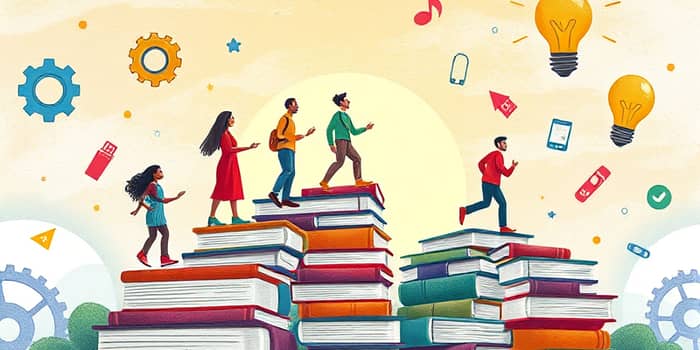
In today’s rapidly evolving world, education is more than a personal journey—it is a cornerstone of economic prosperity. As societies compete on innovation and productivity, understanding how investments in learning translate into national strength is crucial. This article explores the theory, evidence, and practical strategies behind treating human capital as an asset that yields lifelong returns.
Historically, labor was viewed merely as a recurring expense in production. With the work of Schultz, Becker, and Mincer, economists reframed skills and knowledge as investable resources with future value. Education, training, and health interventions started to be treated like machinery purchases—outlays today that generate increased earnings and productivity tomorrow.
This shift emphasized that human abilities are intangible yet fundamental. Unlike physical capital, they cannot be separated from individuals. They grow through schooling, on-the-job learning, family upbringing, and life experiences, shaping both personal destinies and national trajectories.
Quantifying the payoff from schooling is challenging, but robust datasets reveal consistent trends. Federal Reserve studies place the average lifetime return on a bachelor’s degree near 12.5%, while Census data on 5.8 million Americans shows median annual returns around 9–10%. These rates account for tuition, financial aid, and opportunity costs.
However, returns vary widely by field of study. To illustrate these differences, consider the following summary:
Specific degree examples highlight extremes: finance graduates may see lifetime ROI exceeding 1,800% with a payback period under six years, while some education majors face negative returns, never fully recouping costs.
Beyond monetary gains, education builds critical thinking, collaboration, and adaptability—qualities essential in a globalized economy. These attributes reinforce each other, creating a virtuous cycle of learning and productivity.
Policymakers and individuals alike must view these expenditures as capital projects, not mere consumption, to unlock their full potential.
Despite strong average outcomes, public confidence in higher education is waning amid stories of student debt and underemployment. Addressing these concerns requires transparency about expected returns and support for students in choosing strategic pathways.
Educators play a pivotal role in fostering not just knowledge but an entrepreneurial mindset. By framing students as lifelong learners in their own careers, teachers can instill autonomy, critical self-assessment, and a commitment to continuous skill-building.
Historical figures in human capital theory remind us that individuals are not passive recipients but active investors in their potential. Encouraging students to weigh costs, consider market trends, and align studies with passions and job prospects empowers them to maximize their returns.
As technology reshapes labor demand, the gap between high-ROI and low-ROI fields may widen. Growth in IT, healthcare, and advanced manufacturing suggests expanding opportunities for those with relevant qualifications. Meanwhile, lifelong learning platforms and micro-credentials offer flexible routes to upskill mid-career professionals.
Governments and institutions can support these developments by:
Such policies ensure that investments continue to yield both personal fulfillment and national prosperity.
Understanding education as an investment in human capital transforms how we approach learning, spending, and policy. By recognizing the profound returns that skills, health, and knowledge generate, individuals can make informed choices that elevate their life trajectories. Societies, in turn, harness these collective investments to drive innovation, resilience, and shared well-being.
Whether you are a student planning your major, a professional seeking reskilling, or a policymaker designing educational frameworks, viewing every dollar and hour as a strategic investment will unlock far-reaching dividends. In the economy of the future, human capital remains our most precious asset.
References