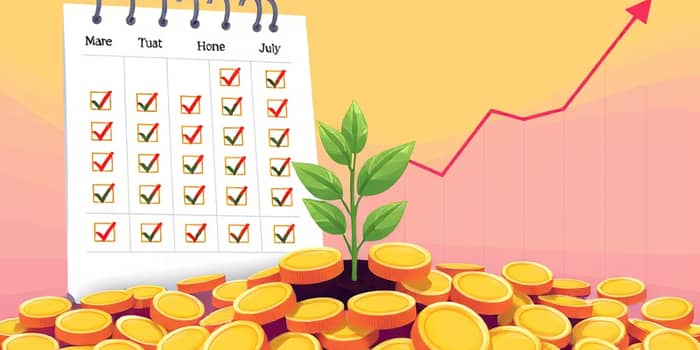
From piggy banks in childhood to diversified portfolios in adulthood, the journey to lasting prosperity is less about grand gestures and more about daily discipline. When we embrace small, regular actions, we unlock the transformative power that shapes our financial destinies.
Many of us recall the thrill of dropping coins into a colorful piggy bank. That simple ritual of saving spare change planted seeds of fiscal responsibility long before we understood stocks, bonds, or real estate.
By setting aside a few coins each week, we internalized the value of deferred gratification. These early victories taught us consistent small contributions every month could yield surprising results over time. As we mature, these foundational habits become the springboard for sophisticated strategies.
Compound interest is often called the eighth wonder of the world. Yet few appreciate how regular, incremental investments can multiply wealth far beyond occasional lump sums.
To illustrate, imagine investing $1,000 every month for twenty years. Depending on your asset allocation, the final value might differ dramatically:
These figures underscore the true power of compounding over time. Whether you favor conservative or aggressive portfolios, time remains your greatest ally when paired with routine.
Financial success is as much psychological as it is mathematical. Breaking big goals into micro-targets fuels motivation and resilience.
Each tiny victory compounds psychologically, generating psychological momentum and financial discipline that makes larger milestones feel within reach. Over time, these habits become automatic, freeing mental energy for strategic decision-making.
Modern platforms offer automated solutions that remove emotion and friction from the equation. By scheduling routine transfers, you ensure investments happen regardless of market noise or personal moods.
By choosing to automate investments for disciplined growth, you turn saving and investing into an effortless habit rather than a chore dependent on willpower.
No strategy is bulletproof against market swings, but consistent approaches cushion the impact. During the 2020 COVID-19 crash, portfolios locked into regular investing schedules dipped sharply but rebounded robustly as markets recovered.
For example, a hypothetical $100,000 portfolio that plunged 30% in March 2020 regained its losses and grew by another 20% within a year for disciplined investors who continued their systematic plans. This pattern repeats across asset classes, from equities to private credit, where conservative lending terms and lower loan-to-value ratios preserve capital through cycles.
True wealth is built with simple routines woven into everyday life. By committing to these practices, you create a framework that endures distractions and pressures.
Over months and years, these rituals instill a mindset of continuous improvement and prudent stewardship.
Consider Emma, who saved pocket change as a child and later invested via SIPs. By her mid-thirties, her disciplined portfolio outpaced peers who chased speculative trends.
Or Raj, an executive who allocated 10% of every bonus into a balanced fund. Despite several market downturns, his long-term consistency yielded a sixfold portfolio increase over two decades.
In property markets, private credit strategies with conservative loan-to-value ratios of 60–65% have delivered stable returns around the cash rate plus a margin, even during economic slowdowns. These examples highlight how diverse applications of routine translate into resilient wealth across industries.
No matter your starting point, the key to generational wealth is not complexity but consistency. By adopting small, regular actions—backed by small, repeatable financial habits—you harness time, psychology, and market mechanics to your advantage.
Today, decide on one habit to implement: open that SIP, set up an automated transfer, or draft a weekly budget review. As each month passes, you’ll look back and marvel at how these modest steps have transformed your financial landscape.
References