The business cycle is a fundamental rhythm of economic life, shaping the fortunes of nations, businesses, and individuals alike.
Understanding its phases allows you to anticipate changes and make informed decisions, turning uncertainty into opportunity.
From the highs of expansion to the lows of recession, each phase offers unique opportunities for growth and resilience, guiding you toward financial stability.
By mastering this cycle, you can navigate economic waves with confidence and purpose.
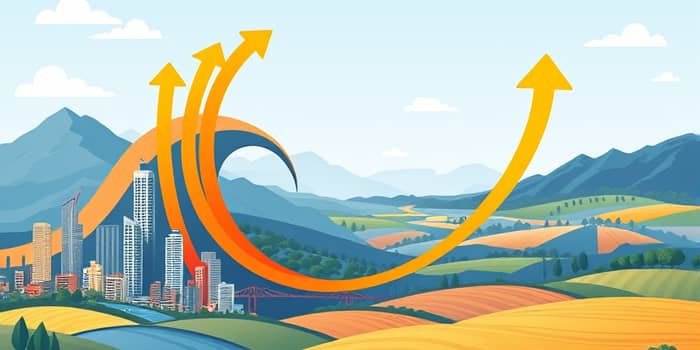
At its core, the business cycle describes recurring fluctuations in economic activity around a long-term growth trend.
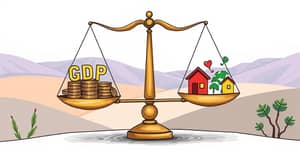
It is measured primarily by changes in real Gross Domestic Product (GDP), alongside indicators like employment and inflation.
These cycles vary in length, averaging about six years in the U.S., with no fixed duration for each phase.
Governments manage them through fiscal and monetary policies to smooth out extremes and promote stability.
Recognizing the cycle's patterns empowers you to adapt and thrive in any economic climate.
The business cycle consists of four standard phases: expansion, peak, contraction, and trough.
Some models expand this to six stages, including depression and recovery, for a more detailed view.
Each phase has distinct characteristics that impact everything from stock prices to everyday spending.
Knowing these phases helps you prepare for shifts and make proactive choices.
During expansion, the economy grows robustly, with rising indicators like employment and corporate profits.
This phase often sees low interest rates, making borrowing easier for businesses and consumers.
Key actions to take include investing in growth sectors and building cash reserves for future downturns.
However, beware of overconfidence; expansion can lead to inflation and eventual slowdowns.
Embracing expansion wisely can set you up for long-term success.
Recession brings declines in GDP, spending, and employment, challenging businesses and individuals alike.
It is defined by two consecutive quarters of negative real GDP growth, signaling a contraction.
To thrive, adopt a mindset of resilience and focus on essential needs over luxuries.
Governments often implement stimulus policies, such as lower interest rates, to aid recovery.
With smart planning, you can emerge from recession stronger and more adaptable.
Recoery marks the turnaround from a trough, with GDP growth turning positive and confidence returning.
This phase is fueled by low prices and accumulated demand, leading to increased business investment.
Stocks often rise early in recovery as investors favor equities over bonds.
To capitalize, focus on ramping up production and exploring new market opportunities.
Recovery offers a fresh start to build momentum and achieve sustainable growth.
Accurate measurement relies on indicators like real GDP, employment rates, and industrial production.
Turning points are dated by agencies using multiple metrics, not just GDP changes.
Output gaps, or differences between actual and potential GDP, help gauge economic health.
By tracking these indicators, you can better predict phase transitions and adjust your strategies.
This table provides a quick reference to align your actions with economic trends.
For businesses, the cycle dictates hiring, expansion, and risk management decisions.
Build cash reserves during expansions to cushion against future recessions.
Investors should time their portfolios by rotating assets based on phase-specific sectors.
Stocks often lead recoveries, offering early opportunities for gains.
Individuals can apply these insights to personal finance, such as budgeting and career planning.
Governments use policies to smooth cycles, but personal vigilance is key to success.
The business cycle is an inevitable part of economic life, but it need not be a source of fear.
By understanding its phases and indicators, you can transform challenges into stepping stones.
Embrace expansion with optimism, navigate recession with resilience, and seize recovery with action.
This knowledge empowers you to build a more secure and prosperous future, no matter the economic climate.
Remember, cycles are opportunities in disguise, waiting for those prepared to ride the waves.
References