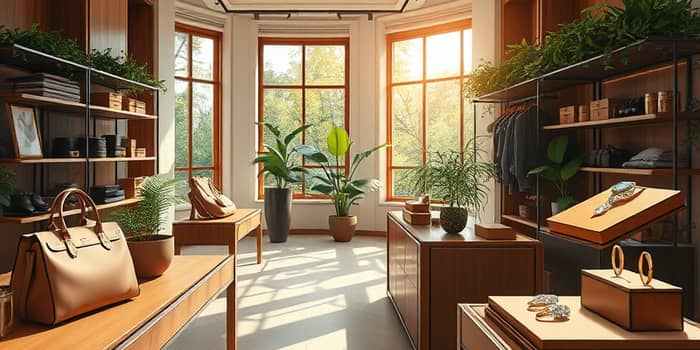
The world of luxury is undergoing a profound transformation. As consumers demand both beauty and responsibility, the concept of "wealth without sacrifice" has never been more relevant. In 2026, sustainability and craftsmanship join forces to redefine opulence, proving that one can indulge in exquisite goods while nurturing the planet.
Traditional notions of luxury once prioritized exclusivity and brand heritage above all else. Today, however, an eco-luxury integrating green practices mindset is driving innovation at every level. From lab-grown diamonds to bio-fabricated leathers, materials science is empowering brands to marry aesthetics with ethics.
Maximalism and self-expression are rising in prominence, especially among younger buyers who seek statement pieces that also tell a sustainable story. As designers explore made-to-order, upcycling, and vintage revivals, the result is a wardrobe that reflects both personality and purpose.
The global luxury goods market is forecasted to reach USD 394.75 billion in 2026, growing at a healthy CAGR of 6.4% from 2023 to 2028. Consumers will spend an estimated USD 50.12 per capita on high-end goods, underscoring robust demand.
Online channels account for 17.6% of total sales today, a share that continues to grow as digital shopping becomes more immersive. Yet, the tactile allure of brick-and-mortar remains strong: immersive flagships and experiential pop-ups are essential for deepening emotional connections.
This breakdown reveals that fashion and leather remain pillars, while cosmetics, jewelry, and accessories sustain strong growth. Brands that innovate on materials and production methods stand poised to capture an even larger share.
Leading houses have committed substantial resources to sustainable initiatives. Chanel has allocated $1 billion between 2023 and 2028 to advance low-impact sourcing and ethical manufacturing. Gucci’s recent sustainable collection showcases exceptional craftsmanship meets ethical responsibility through upcycled fabrics and recycled hardware.
Louis Vuitton continues to capture market share by blending high jewelry creations with responsible gem sourcing, while Hermès’s $500 million expansion in 2024 prioritized carbon-neutral processes and traceable supply chains. These investments signal that long-term profitability and purpose can go hand in hand.
Embracing sustainable luxury need not be daunting. By focusing on quality over quantity, every purchase becomes an investment in style and values. Below are actionable strategies to build a wardrobe that lasts:
These steps empower individuals to make informed choices, reducing waste while enjoying the finest craftsmanship.
Despite its promise, sustainable luxury faces hurdles. Brands must maintain exclusivity even as they expand. Regulatory landscapes are tightening, with stricter rules on ethical sourcing of diamonds, exotic skins, and transparency requirements throughout supply chains.
High tariffs, anti-counterfeiting laws, and data protection mandates further complicate cross-border operations. Yet, these challenges can become competitive advantages. Companies that embrace stringent standards build trust and reinforce their reputation for authenticity.
Economic pressures also influence consumer priorities. As living costs rise, some buyers hesitate to pay premiums for eco-friendly alternatives. Here, brands can emphasize long-term value and durability, reframing sustainability as an investment rather than an extra expense.
By 2028, sustainable products are predicted to account for 17% of total luxury market share, growing 2.7 times faster than conventional offerings. Key growth engines will include China, Japan, the Middle East, and India, where rising affluence and digital adoption fuel demand.
Technological advances—AI-driven design, smart fabrics, and digital clienteling—will further personalize the shopping experience. Immersive flagship spaces, combining augmented reality with artisanal workshops, will bridge the digital and physical realms.
Ultimately, the most successful brands will be those that view sustainability as integral to their DNA. By prioritizing commitment to carbon neutrality and transparency and by fostering genuine relationships with communities and clients, they will set new standards for enduring style.
The era of "fast fashion" is giving way to a movement where every garment and accessory tells a story of conscious creation. For consumers, this is an opportunity to celebrate individuality, uphold ethical values, and secure lasting wealth—without ever sacrificing style.
References