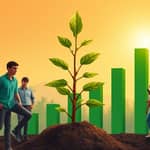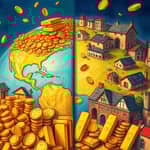
In recent decades, economic progress has been measured almost exclusively by gross domestic product, a system that correlates output with ownership but often overlooks the full picture of human experience. Today, policymakers and communities demand a deeper understanding of success, one that embraces human needs alongside environmental stewardship. Sustainable prosperity offers an inclusive vision, integrating economic growth with social well-being and environmental resilience to ensure equitable outcomes for current and future generations.
The living standards debate has shifted under the weight of mounting societal and ecological pressures. Traditional GDP figures fail to account for social cohesion, mental health, or the cost of environmental degradation. Recognizing these gaps, experts propose new metrics that capture both human and planetary well-being. By focusing on long-term viability amid global challenges, we can establish benchmarks that reflect quality of life, community resilience, and ecological health in concert.
These comprehensive assessments emphasize values that matter most: access to basic needs, fair distribution of resources, and a healthy environment. Such an approach encourages policymakers to prioritize solutions that deliver shared prosperity rather than purely material expansion.
The urgency for new measures became apparent during the COVID-19 pandemic, when overall well-being losses far exceeded shifts in GDP. Concurrently, the climate crisis and resource scarcity highlight the vulnerability of growth models that ignore long-term impacts. A clear consensus has emerged: we must shift from ownership-based prosperity models to systems that value human connection, environmental health, and sustainable livelihoods.
Surveys show an increasing public preference favors holistic well-being indicators over pure economic outcomes. Citizens now expect governments and businesses to measure performance not just in monetary returns but also in terms of community health, inclusion, and environmental protection.
Over the past decade, several frameworks have gained traction. Each offers a unique lens through which to view progress, yet all share the goal of balancing human prosperity with planetary limits.
Businesses and governments are also adopting integrated reporting models to track sustainable prosperity. The World Economic Forum’s four-pillar structure—Governance, Planet, People, and Prosperity—provides harmonized disclosures that align with the SDGs. Meanwhile, EU policymakers advocate a GDP+3 approach to embed social and environmental criteria into economic planning. Across these initiatives, the central theme is to harmonize reporting to track SDG progress and ensure organizations monitor environmental, social, and governance factors alongside financial performance.
The classical sustainability model rests on Environmental, Social, and Economic pillars. These interdependent areas form the interdependent foundation for balanced growth, reinforcing one another to support thriving communities and healthy ecosystems.
Neglecting any one pillar risks undermining overall stability. For example, economic downturns can restrict funding for conservation, while social inequity can lead to environmental conflicts. Sustainable prosperity requires an interdependent foundation for balanced growth that integrates all three dimensions.
To translate concepts into action, concrete metrics are essential. Organizations can track multiple indicators to gauge progress and direct resources where they are most needed.
Creating a truly sustainable prosperity framework involves navigating complex trade-offs. Social inequality can exacerbate environmental degradation, while resource depletion may stifle economic recovery. Addressing one issue in isolation often yields unintended consequences elsewhere. By bridging economic, environmental, and social priorities, stakeholders can design policies that deliver multiple benefits—such as circular economy initiatives that reduce waste, foster new industries, and promote job creation in recycling and remanufacturing.
Transitioning to sustainable prosperity demands collaboration across sectors and scales. Policymakers should codify alternative metrics into national reporting systems and budget processes. Corporations must integrate ESG and SDG-aligned indicators into their core strategies. Civil society, academia, and communities can drive innovation by sharing best practices and developing open data platforms. By fostering data-driven decision making for sustainability and empower communities through inclusive policies, we lay the groundwork for measurable progress and adaptive management.
Advances in data collection and analytics promise to refine prosperity indicators further, enabling real-time assessments of societal well-being and environmental health. As technology evolves, so too will our ability to measure impact across scales, from local neighborhoods to global supply chains. By emphasizing long-term value creation for society and adopting practical steps for transformative change, we can forge a path toward enduring well-being.
Ultimately, sustainable prosperity transcends narrow definitions of success. By aligning economic activity with human dignity and ecological balance, we can build resilient economies and sustainable growth that serve people and the planet alike.
References