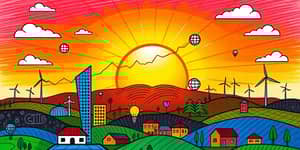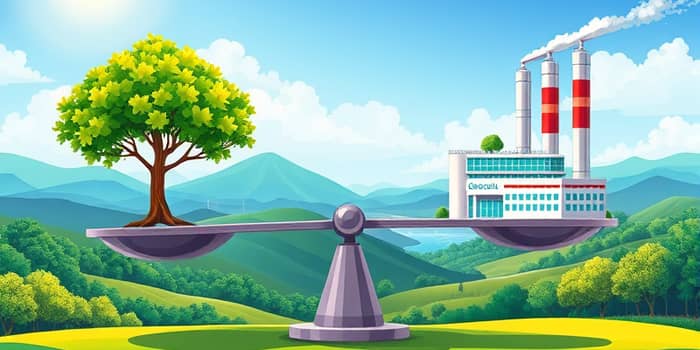
In an era where economic progress often comes at the cost of environmental degradation, sustainable economics offers a beacon of hope. It challenges the traditional paradigm by integrating economic growth with environmental protection and social equity.
This approach, often framed as a "green economy," prioritizes long-term viability over short-term gains. It seeks to ensure that our actions today do not compromise the ability of future generations to meet their needs.
At its core, sustainable economics is about finding harmony between human development and the natural world. It requires us to think beyond mere profit and consider the broader impact of economic activities on society and the planet.
Sustainable economics is defined by its focus on balancing human needs with the planet's capacity for renewal. It operates within ecological boundaries while ensuring social equity and economic viability.
The framework rests on three interconnected pillars: economic, environmental, and social sustainability. Each pillar is essential for creating a resilient and fair system that can withstand future challenges.
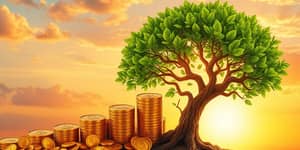
Economic sustainability involves fostering long-term growth without depleting resources. It emphasizes efficiency and innovation to drive progress in ways that are both profitable and responsible.
Environmental sustainability is about protecting ecosystems and reducing our ecological footprint. It calls for actions that preserve biodiversity and natural cycles for a healthier planet.
Social sustainability ensures that development benefits all members of society. It focuses on equity, health, and quality of life for everyone, leaving no one behind in the pursuit of prosperity.
To achieve true sustainability, we must address all three dimensions equally. Here are the key aspects that define each pillar:
These pillars are not isolated; they interact dynamically to shape a holistic approach to development. By strengthening each one, we can build economies that are both thriving and sustainable.
Various frameworks outline principles to guide the transition to a sustainable economy. These principles provide a roadmap for balancing growth and environment, offering practical steps for individuals and institutions.
One prominent set is the Five Principles of a Green Economy by the Green Economy Coalition. They emphasize a holistic approach to development that centers on human and planetary wellbeing.
These principles encourage us to rethink how we measure success, moving beyond GDP to include broader indicators of progress and happiness.
Other frameworks add depth to our understanding of sustainability. For instance, the Four Principles of Sustainability highlight critical areas for action that can drive meaningful change.
By embracing these principles, we can create economies that are not only productive but also just and resilient in the face of global challenges.
Economist John Ikerd provides a categorized view of principles that treat economies as living systems. These principles emphasize holism, diversity, and resilience, guiding us toward more sustainable practices.
This table illustrates how sustainability spans across different domains, requiring integrated approaches that respect the interconnectedness of all elements. By applying these principles, we can foster economies that are adaptive and regenerative, much like natural ecosystems.
The relationship between economic growth and environmental pollution is complex, often described by the Environmental Kuznets Curve (EKC). This theory suggests that pollution initially rises with development but can decline at higher income levels if managed properly.
Data shows that pollution often rises slower than GDP, indicating potential for decoupling. For example, in the US, CO2 emissions increased by 0.4% per year from 1990 to 2014, while GDP per capita grew by 1.4% annually.
This trend highlights that with mindful management, economic growth can be decoupled from environmental harm. However, challenges persist, as seen in cases like China, where unbalanced growth has aggravated pollution and restrained economic progress.
The EKC hypothesis reminds us that early stages of industrialization often come with environmental costs, but with the right policies, we can reverse this trend and achieve cleaner growth.
Ignoring sustainability comes with a high price, as projections warn of significant economic losses if we fail to act. These statistics underscore the urgency of adopting green practices.
These numbers are a call to action, urging us to invest in a future where economy and environment thrive together.
The Industrial Revolution serves as a cautionary tale, where rapid growth outpaced waste management, causing long-term environmental damage that we still grapple with today. This period shows the dangers of prioritizing short-term gains over planetary health.
China's experience illustrates how unbalanced growth can aggravate pollution, which in turn restrains GDP, creating a cycle that requires careful intervention. Biennial "peak-to-valley" drops in SO2 emissions relative to GDP growth over 30 years highlight the need for balanced policies.
Policies like the Clean Air Act have proven that environmental regulations can boost the economy by fostering innovation and creating green jobs. This demonstrates that protecting the environment is not a barrier to growth but an enabler of it.
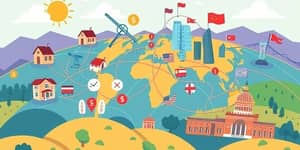
Globally, countries like the DRC and Bangladesh face severe impacts from environmental failure, underscoring the need for equitable and resilient strategies that support vulnerable communities.
Transitioning to a sustainable economy is not without obstacles. Several key challenges must be addressed to ensure a smooth and just shift toward greener practices.
By acknowledging these challenges, we can develop strategies to overcome them and build a more sustainable world.
Despite the challenges, there are proven strategies to achieve sustainable economics. Implementing these can pave the way for a greener world that benefits both people and the planet.
These solutions empower individuals, businesses, and governments to take actionable steps toward a sustainable future, fostering resilience and innovation.
Sustainable economics is not just a theoretical concept; it is a practical necessity for our survival and prosperity. By balancing growth with environmental stewardship, we can create a future that is equitable and resilient for all.
Every individual, business, and government has a role to play in this transition. From adopting green technologies to advocating for fair policies, small steps can lead to significant change that transforms our world.
Let us commit to building economies that thrive within planetary boundaries. Together, we can ensure that progress does not come at the expense of our planet or future generations, crafting a legacy of hope and sustainability for years to come.
The journey toward sustainable economics requires courage and collaboration, but the rewards—a healthier environment, a fairer society, and a stronger economy—are within our reach if we act now.
References