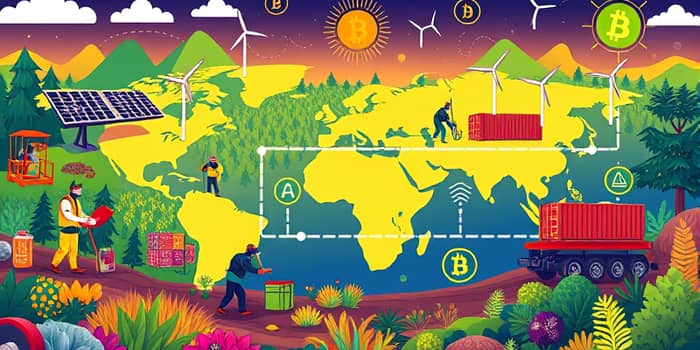
As global awareness of environmental and social issues intensifies, the commodities landscape is undergoing a profound transformation. No longer viewed solely as raw materials for industry, these vital resources are now at the forefront of a shift toward ethical supply chains integrating ESG principles. From the fields of agriculture to the depths of mineral extraction, producers, traders, and financiers are collaborating to embed transparency, fair labor, and reduced environmental impact into every link of the value chain. This comprehensive article explores the trends, challenges, and financing innovations driving this movement, and offers practical guidance for stakeholders.
After years of price volatility, global commodity prices are forecast to dip to their lowest point in six years. Yet beneath this broad softness lies a powerful undercurrent: the energy transition. As the world races toward decarbonization, demand for metals critical to renewable energy and electric vehicles is surging. Industrial metals such as copper, aluminum, lithium, nickel, and cobalt enjoy stable and modest price growth as solar panels, wind turbines, and battery factories multiply across continents. Meanwhile, agricultural markets retain stability, though population growth and biofuel mandates exert gentle upward pressure on grains like wheat and corn.
Despite lower oil and gas prices driven by abundant supply, global EV sales eclipsed 20 million in 2025, accounting for more than a quarter of new car purchases. This shift directly reduces fuel demand while fueling investments in green technology. In 2025 alone, clean energy investment hit $3.3 trillion, two thirds of total energy spending, with solar projects commanding some $450 billion. These figures underscore the dual nature of the outlook: short-term price softness meets long-term opportunity in the green revolution.
At the heart of sustainable commodities lies the concept of an ethical supply chain. Producers must guarantee fair wages and safe working conditions. Environmental care is paramount: certified sourcing, reforestation, and emissions controls reduce ecological footprints. Social well-being initiatives support local communities via training and philanthropy. Effective governance frameworks track progress and ensure accountability at every stage—from raw material extraction to finished product delivery.
Building such systems requires collaboration with specialized assurance firms for audits and certifications. Techniques like blockchain for verification and enhanced traceability cement trust, while inclusive business models prioritize diversity and equitable opportunity. These strategies eliminate blind spots and foster resilient partnerships across geographies and cultures.
Transitioning to ethical supply chains often involves higher upfront costs. Yet the long-term savings and reputational benefits are substantial, with sustainable operations cutting expenses by up to 16 percent over time. To bridge initial financing gaps, markets have developed a suite of instruments that tie funding to ESG performance. Businesses can now access capital on favorable terms by demonstrating carbon reductions, labor improvements, or conservation commitments.
Green bonds and sustainability-linked loans are leading vehicles in this space. Green bonds finance specific environmental projects, while sustainability-linked loans adjust interest rates based on achievement of preagreed ESG targets. Supplier financing programs extend loans to upstream partners for investments in eco-friendly technology and fair labor practices. Digital platforms streamline reporting, and real-time dashboards allow investors to monitor impact metrics.
This convergence of finance and ethics is already unlocking billions in opportunity. Projections suggest ESG supply chain finance could swell to $660 billion in the coming years. By aligning profit with purpose, these tools empower companies to scale up sustainable practices without compromising competitiveness.
A number of global brands have pioneered sustainable supply chain finance with remarkable results. In 2014, Levi Strauss & Co. launched one of the first programs, linking loan rates to water and energy efficiency metrics. Within a year, participating suppliers cut resource use significantly. PUMA collaborated with HSBC to deliver over $100 million in lower-cost financing to 15 percent of its suppliers, rewarding high sustainability ratings. Walmart’s 2019 initiative tied borrowing costs to carbon reductions, motivating suppliers across its vast network.
Bridgestone Europe partnered with fintech firm Taulia in 2020, granting preferential pricing to vendors who boosted their EcoVadis sustainability scores. The program digitized onboarding and audit processes, increasing supplier engagement and improving environmental outcomes. Similar models in agricultural sectors—such as certified banana supply chains—demonstrate that rigorous audits and community training can produce high-impact social and ecological benefits.
As we look to 2026 and beyond, the sustainable commodities space faces a mix of opportunities and risks. Geopolitical tensions, extreme weather events, and macroeconomic shifts could threaten supply stability. Policies like the EU’s Carbon Border Adjustment Mechanism, set to impose over €12 billion in costs on iron, steel, cement, fertilizers, and aluminum imports in 2026, will reshape trade flows and favor low-carbon producers.
Conversely, emerging technologies and policy frameworks offer new pathways for progress. China’s recent pledge to produce over a billion gallons of renewable fuels annually, coupled with decarbonization measures such as emissions trading schemes, accelerates the transition. Investors can capitalize on diversified growth across metals, agriculture, and forest products, all underpinned by sustainability credentials. The integration of blockchain, AI-driven demand forecasting, and advanced analytics will further de-risk projects and enhance returns.
To thrive in this evolving landscape, stakeholders must adopt a holistic approach that blends robust governance with innovative financing. Building deep relationships across the supply chain, investing in transparency tools, and aligning capital with impact goals will position companies at the vanguard of a more equitable and resilient global economy. The future of commodities is not just about extraction and trade; it is a story of transformation, stewardship, and shared prosperity. By embracing these trends and committing to continuous improvement, investors and operators alike can play a leading role in building a greener, fairer world.
References