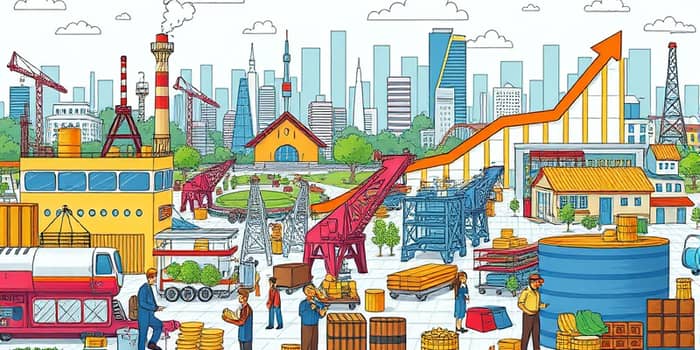
In a world grappling with economic uncertainty, the quest for sustainable growth calls for innovative approaches. Supply-side economics provides a powerful framework that challenges conventional wisdom and focuses on the engines of prosperity.
This theory suggests that by empowering producers, societies can unlock new levels of wealth and opportunity. Incentives for work and investment are at its core, making it a beacon for those seeking to foster long-term economic health.
Rooted in classical ideas, it asserts that production drives demand naturally, a principle that has reshaped economies across history. Embracing this perspective can inspire transformative policies that benefit everyone.
At its essence, supply-side economics posits that economic growth stems from increased production. By boosting the aggregate supply of goods and services, it aims to lower prices, raise employment, and expand output steadily.
This contrasts with demand-side theories, which prioritize consumer spending. Supply-siders argue that prosperity begins with producers, drawing from Say's Law and historical insights to make their case.
These principles highlight how removing constraints can unleash potential. They encourage a shift from short-term demand boosts to long-term supply enhancements.
Supply-side economics rests on three key pillars that influence aggregate supply. Each plays a critical role in shaping economic outcomes and fostering a conducive environment for growth.
Additionally, broader strategies include investments in human capital and infrastructure. Sound money and free trade are essential components that support these efforts, creating a holistic approach to economic management.
Understanding supply-side economics requires grasping its core models and concepts. These tools help illustrate how incentives and barriers shape economic behavior.
These models underscore that economic behavior is driven by rewards. They provide a roadmap for policymakers to design effective strategies that boost growth sustainably.
To appreciate supply-side economics, it's useful to contrast it with other approaches. This table highlights key differences with Keynesian demand-side economics.
This comparison shows how different priorities yield distinct results. It helps clarify why supply-side advocates emphasize production over consumption.
Supply-side economics has been applied in various contexts, offering real-world lessons on its impact. From Reagan-era reforms to modern China, history provides compelling case studies.
These examples demonstrate that targeted policy shifts can catalyze growth. They inspire confidence in the theory's practical applicability across different economic landscapes.
No economic theory is without its detractors. Understanding criticisms helps provide a balanced view and encourages thoughtful policy design.
Despite these points, supply-siders counter with evidence of productivity surges. This dialogue enriches economic discourse and fosters innovation in approach.
In today's global economy, supply-side principles offer valuable insights for addressing contemporary challenges. They can guide efforts to enhance competitiveness and resilience.
By applying these lessons, individuals and policymakers can foster environments where innovation thrives. This approach empowers communities to build sustainable futures through smart incentives.
Ultimately, supply-side economics reminds us that production is the foundation of wealth. It encourages a mindset shift from consumption to creation, offering a path to shared prosperity.
Embracing its principles can lead to more dynamic and inclusive economies. Let this knowledge inspire action toward a brighter economic horizon for all.
References