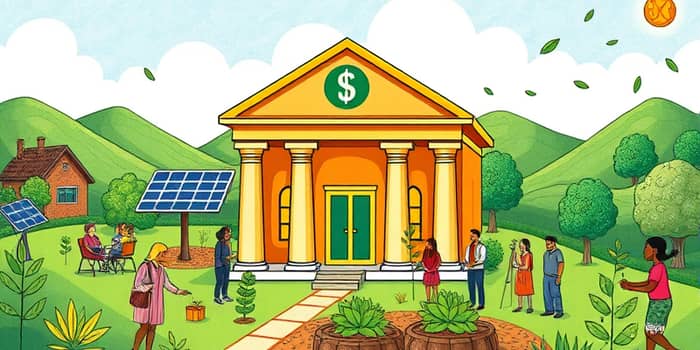
In a world where financial decisions shape communities and influence global well-being, choosing a bank becomes more than a matter of convenience. It is an act of agency that channels resources into causes we care about. When your savings bolster renewable energy projects or fund affordable housing, your deposit transforms from a static asset into a catalyst for change. This guide explores how ethical banking can amplify your impact and offers practical steps to align your money with your values.
Socially responsible banking, often called ethical banking, goes beyond interest rates and fees. These institutions prioritize positive social and environmental impact alongside fiscal health. By screening investments through Environmental, Social, and Governance (ESG) standards, they redirect capital toward enterprises that benefit society and the planet.
Key principles include transparency in operations, community engagement, and long-term resilience. Rather than fueling industries linked to child labor or fossil fuels, ethical banks invest in renewable energy, affordable housing, and fair trade ventures. This model acknowledges that financial returns and societal welfare need not be mutually exclusive.
Your money wields power. By selecting a bank committed to sustainability, you contribute to measurable outcomes: reduced carbon emissions, increased affordable housing units, and enhanced access to financial services for marginalized groups. Studies show that banks adhering to ESG guidelines often outperform peers by securing better financial outcomes and lower capital costs.
Transparency lies at the heart of this approach. Ethical banks report on their sustainability activities, often measuring Scope 1 and 2 greenhouse gas emissions, community donations, and volunteering hours. This level of disclosure empowers account holders to track how their money is deployed and ensures accountability.
Beyond metrics, the real joy comes from witnessing local change: a neighborhood revitalized by small-business loans, students funded through scholarship programs, or a rural community powered by solar arrays. When you see the direct results of your values in action, banking transforms into a shared mission.
Several banks embody the spirit of socially responsible finance. Their initiatives range from community food drives to carbon-neutral operations and B Corp certifications. The table below highlights diverse approaches and tangible impacts.
Each institution demonstrates a unique path to impact. Whether through innovative credit programs for underserved borrowers or partnerships with local nonprofits, these banks exemplify how deposits can drive real progress. By studying their models, prospective customers can identify features that resonate with their personal values.
Selecting the right institution requires a blend of research and self-reflection. Consider your top causes: climate action, social equity, or community revitalization. Look for certifications and memberships that signal genuine commitment.
Making the switch to an ethical bank can feel overwhelming, but simple actions yield immediate results. Begin by auditing your current accounts—savings, checking, credit cards—and list the fees, interest rates, and social impact metrics you value most.
Next, shortlist banks aligning with your priorities. Reach out to their customer service teams with specific questions about ESG integration, community programs, and reporting practices. Many banks offer introductory webinars or local branch events where you can meet staff and gauge their authenticity.
Once you choose an institution, transfer direct deposits and automatic payments gradually. This phased approach reduces disruption and allows you to confirm that all transactions clear smoothly. Keep your old account open for a transition period, monitoring for overlooked subscriptions or charges.
Finally, engage with your new bank’s community initiatives. Volunteer events, advisory boards, and customer feedback channels offer opportunities to deepen your involvement. By lending your voice and resources, you help steer the institution toward ever-greater impact.
When you view money as more than a ledger entry, it becomes a force for good. Ethical banking invites us to align our financial lives with the broader goals of sustainability, equity, and resilience. Each deposit, loan, or investment carries the potential to uplift communities and preserve our planet.
As more individuals demand accountability and purpose-driven finance, the banking sector evolves. Boards appoint ESG officers, transparent reporting becomes standard, and product innovation accelerates. Your choice to move funds into a socially responsible bank contributes to a global wave of change—an affirmation that finance can be both profitable and principled.
Embrace this journey with confidence. Your money can embody hope, protect the environment, and empower future generations. By making informed decisions and actively participating in community initiatives, you transform your banking experience into a shared mission with tangible, lasting benefits.
References