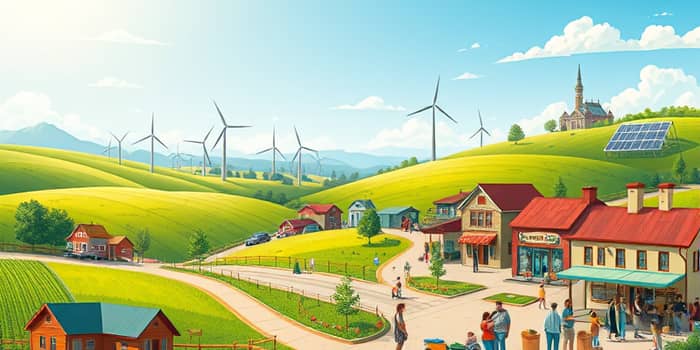
As communities across America grapple with demographic shifts and economic transitions, innovative community-driven models are emerging as catalysts for growth. This movement seeks to reverse declining population trends and build economies that thrive beyond extractive industries.
Grounded in local assets—from scenic landscapes to cultural traditions—these strategies marry visionary leadership with practical investments. By combining entrepreneurship, digital infrastructure, and policy reforms, rural areas can reclaim momentum and offer enriched lives for residents.
Conventional rural development often hinged on luring large firms through industrial parks and generous tax breaks. While effective in the short term, this approach can leave communities vulnerable when companies relocate or downsize.
Transitioning to locally-led economic planning means empowering residents to start and expand small businesses, cooperative ventures, and social enterprises. By keeping decision-making close to the ground, regions unlock unique opportunities that reflect their values and strengths.
Moreover, promoting value-added agricultural products encourages farmers to process and market goods locally, capturing a greater share of profits. Such vertical integration not only enhances incomes but also builds resilient food systems.
Concrete comparisons illuminate why rural stakeholders are embracing new paradigms:
Economic vitality stems from more than factories and storefronts. Amenities like high-speed internet, quality schools, housing diversity, and recreational spaces form the backbone of attractive rural communities.
Data reveal that counties investing in comprehensive infrastructure improvements experience measurable upticks in population growth and startup formation. Broadband expansion alone can unlock remote work opportunities, drawing back former residents and attracting newcomers.
Health care access further shapes rural futures. Pandemic-era telehealth policies demonstrated that regulatory flexibility can sustain clinics, reduce hospital transfers, and expand mental health services. Transforming these temporary measures into permanent rules would solidify care networks in underserved areas.
Rural regions are increasingly appealing sites for cutting-edge data centers and AI campuses. With abundant land and predictable power supplies, they offer hyperscale operators the capacity to expand while catalyzing local workforce development.
However, community leadership must steer negotiations to ensure that benefits—such as job training, improved energy infrastructure, and revenue-sharing agreements—align with regional priorities. Negotiation frameworks anchored in equitable partnership principles help avoid one-sided deals.
In agriculture, precision farming uses IoT sensors, drones, and predictive analytics to optimize yields and conserve resources. These practices unlock margins for small and mid-sized farms, reducing reliance on volatile commodity markets and spurring innovation in bio-based materials and specialty crops.
Real-world examples underscore the potential of integrated, locally-led revitalization:
These cases illustrate that when communities harness natural beauty and technological assets, they generate diversified and enduring growth.
Effective revitalization requires a policy environment that supports localized decision-making and sustained investment. Key avenues include:
Additionally, aligning federal strategic economic development programs with local priorities amplifies impact, unlocking resources for social infrastructure—such as trust-building initiatives and volunteer networks—that underpin long-term success.
Despite progress, rural revitalization faces persistent barriers. Structural inequities in regions with historical disinvestment require targeted strategies to uplift marginalized populations and ensure equitable economic participation.
Another hurdle is transitioning from planning to implementation. Many communities possess visionary blueprints yet lack diagnostic tools to pinpoint high-potential tradeable sectors. Investing in data-driven assessments and peer learning networks can accelerate actionable insights.
Emerging risks include economic disruptions from global recessionary pressures and the delicate balance between large-scale industrial projects and local priorities. Sustaining adaptive governance structures and fostering transparent community dialogue are essential.
Rural revitalization is an evolving endeavor that marries tradition with innovation. By embracing community assets, technological advances, and policy realignments, regions can craft unique pathways to prosperity.
The collective journey demands patience, collaboration, and a willingness to experiment. As rural America reinvents its economic landscape, the fusion of entrepreneurship, social infrastructure, and regional partnership offers a hopeful blueprint for generations to come.
References