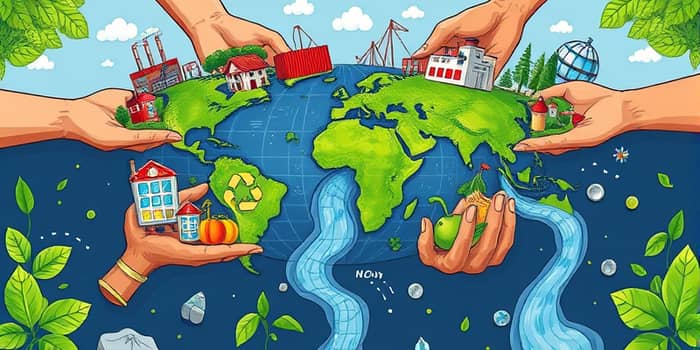
In today’s interconnected world, businesses can no longer focus solely on profits. They must recognize the profound impact of every link in their supply chain. Ethical production is no longer optional—it’s a necessity for sustainable growth and global well-being.
From the extraction of raw materials to the moment a product reaches a consumer, each step carries environmental, social, and economic consequences. This article explores how organizations can build transparent supply chains that honor human rights, protect ecosystems, and strengthen their competitive edge.
A responsible supply chain extends traditional corporate social responsibility into every facet of procurement and production. It demands that companies go beyond legal compliance, adopting voluntary commitments to ethical practices and environmental stewardship. This journey begins with mapping every contractor, supplier, and transporter involved in creating a final product.
True responsibility means asking hard questions: "Who harvested these raw materials? Under what conditions were workers paid? What is the environmental footprint of shipping?" Only with these answers can an organization chart a path toward meaningful transparency.
Building an ethical supply chain relies on four interrelated pillars. These form the foundation for any responsible sourcing strategy:
Investing in ethical supply chains yields powerful returns beyond brand reputation. Companies witness:
By embedding sustainable practices, businesses can transform challenges into opportunities, carving out a lasting competitive advantage in crowded markets.
A structured approach helps organizations move from aspiration to action. The following six‐step framework can guide implementation:
These steps encourage supplier collaboration rather than unilateral demands, fostering long-term partnerships built on trust and shared objectives.
Global benchmarks provide clear guidelines and facilitate stakeholder confidence. Key standards include:
Aligning with these frameworks enables firms to benchmark performance and receive third-party certification, reinforcing stakeholder trust.
Leading organizations demonstrate the transformative power of ethical sourcing. Canadian Tire conducts hundreds of factory audits annually, ensuring suppliers comply with its strict code of conduct. Mountain Equipment Co-op prioritizes fair trade and organic materials, driving significant improvements in worker welfare and carbon footprint.
In agriculture, McCain’s Global Good Agricultural Practices program guides thousands of growers toward sustainable methods, boosting yields while safeguarding soil and water resources. Technology leader BlackBerry partners with conflict-free mineral initiatives, conducting on-site audits to prevent human rights abuses.
Empowered consumers play a critical role. By asking, "Under what conditions was this product made?" and choosing brands that disclose their practices, individuals can drive systemic change. Retailers respond by highlighting responsibly sourced items, often using sustainability indices or in-store labeling to guide purchases.
This dynamic creates a feedback loop: as demand for ethically produced goods rises, more companies adopt responsible supply chains to meet customer expectations, amplifying positive social and environmental outcomes.
Global challenges like climate change, labor exploitation, and resource depletion demand collective action. No single company can transform an entire supply chain alone. Collaborative initiatives—sector alliances, non-profit partnerships, and cross-industry coalitions—are essential for scaling impact.
By investing in ethical production, organizations not only protect people and planet but also secure a resilient future for their business. The journey toward responsible supply chains is complex, but the rewards—enhanced reputation, reduced risk, and lasting stakeholder loyalty—make it a vital investment.
As consumers, investors, and citizens, we all hold the power to accelerate this transition. By supporting transparency, demanding accountability, and championing sustainability, we can build a world where every product embodies respect, justice, and environmental care.
References