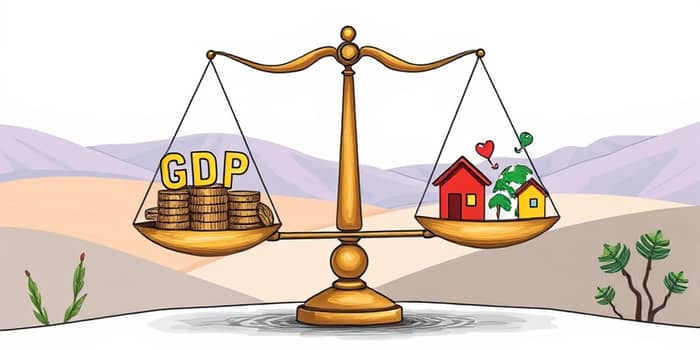
Every day, headlines trumpet GDP figures as the ultimate measure, but this narrow focus can be misleading. The reality is more nuanced and requires deeper exploration.
Gross Domestic Product often masks critical issues like inequality and environmental degradation. By focusing solely on output, we ignore human and planetary costs.
To move beyond this, we must explore indicators that reflect true economic health and prosperity. This guide will help you understand what truly matters.
GDP measures economic output but has significant limitations that distort our perception.
It ignores factors crucial for well-being, leading to a skewed view of success.
Key limitations include:
These gaps show that GDP can rise from harmful activities, highlighting the need for broader social and environmental impacts in metrics.
To gain a fuller picture, economists use standard indicators that complement GDP.
Each provides unique insights into different economic aspects, from labor to trade.
Here is a table summarizing key traditional indicators:
Used together, these indicators reveal complexities like an overheating economy needing management when unemployment is low but inflation high.
Alternative measures focus on well-being and sustainability, addressing GDP's shortcomings.
They provide a more comprehensive view of economic health and progress.
Key alternative indexes include:
These tools help assess real living standards and sustainability, showing disparities when GDP grows but incomes stagnate.
Forecasts for 2026 illustrate how indicators interact to shape economic health globally.
Moderate growth with disinflation is expected, but nuances reveal deeper trends.
Key regional insights include:
These examples show that headline GDP numbers hide critical details about job quality and purchasing power.
Understanding economic health involves recognizing potential challenges and uncertainties.
Key risks to monitor include:
These risks highlight the need for resilient and inclusive economic policies to navigate volatility.
As individuals and decision-makers, use this knowledge to assess economic health accurately.
First, look beyond GDP by monitoring a mix of indicators.
Practical steps include:
Also, be aware of data sources and forecaster reliability to avoid pitfalls.
By adopting this approach, you can make informed decisions promoting prosperity.
Measuring economic health enriches GDP with broader perspectives for true prosperity.
It encompasses well-being, equity, and environmental stewardship for long-term success.
As we move forward, champion metrics that reflect what truly matters for prosperity.
By looking beyond headlines, we build economies that serve people and the planet.
Embrace this complexity to navigate challenges with clarity and purpose.
References