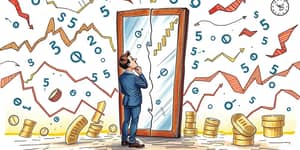
Every day we make decisions with stakes both large and small, yet few forces shape our choices as powerfully as loss aversion. This cognitive bias means that the pain of losing is felt far more vividly than the delight of an equivalent gain. In this article, we’ll explore the origins, science, and practical ways to recognize—and overcome—this deep-seated tendency.
First identified in 1979 by Amos Tversky and Daniel Kahneman, loss aversion became a cornerstone of prospect theory. Their groundbreaking research revealed that people feel losses roughly twice as strongly as gains. In other words, losing $50 stings more than winning $50 pleases.
Tversky and Kahneman later summarized this finding in 1992, showing that individuals are risk-seeking when maximizing gains but risk-averse when minimizing losses. This 2:1 ratio explains why most of us prefer a sure $45 over a 50–50 chance at $100.
Evolutionary psychologists offer a compelling explanation: for our ancestors, any loss—like spoiled food or lost shelter—could threaten survival. Gaining an extra day’s food rarely extended life, but missing one vital resource could be fatal.
As Kahneman noted, organisms that treat threats as more urgent have a clear survival advantage. Over generations, this hardwiring made loss aversion a default response, ensuring we err on the side of caution.
Advances in fMRI studies reveal the brain’s wiring behind loss aversion. The ventral striatum lights up with anticipation of reward, while the frontomedial cortex shows intensified alarm at the prospect of loss.
Interestingly, the neural deactivation slope for increasing losses is steeper than the activation slope for increasing gains. This asymmetry confirms that losses loom larger than gains within our neural networks.
Dopamine also plays a crucial role: reduced dopamine signaling correlates with increased loss aversion, whereas acute D2 agonists can diminish it. Gender differences emerge too—men often show higher neural activation in reward-sensitive areas, hinting at complex interactions among peer influences, emotion, and risk.
Loss aversion shapes decisions in finance, consumer behavior, healthcare, and beyond. Whether buying stock or groceries, the dread of loss outweighs the thrill of gain.
Consider these everyday scenarios:
In finance, investors often shun profitable opportunities because the memory of past losses stings so sharply. Retailers exploit this by highlighting limited stock, prompting customers to buy now rather than risk missing out.
In healthcare, framing outcomes as potential losses (“You might lose one life out of ten”) drives different patient reactions than highlighting lives saved. Insurers rely on this bias too—people pay premiums to avoid the regret of uncovered losses.
Loss aversion is often conflated with risk aversion, but they differ. Risk aversion is a rational preference for certain outcomes over probabilistic ones, even if the expected values align. Loss aversion, by contrast, is an emotional overreaction to losses.
Another concept, loss attention, refers to heightened focus when losses are at stake. Unlike loss aversion—which inflates the subjective weight of losses—loss attention can sometimes improve decision quality by prompting careful evaluation.
Three key cognitive biases intersect here:
Although loss aversion is deeply rooted, practical steps can mitigate its grip:
By implementing these strategies, you can begin to see risks and rewards more clearly, making choices that align with your long-term goals rather than short-term fears.
Loss aversion is a powerful lens through which our minds view every gamble—financial, personal, or professional. Understanding its evolutionary origins, neural mechanisms, and real-world effects helps us recognize when we’re letting fear of loss drive our choices.
With mindful strategies and deliberate reframing, we can regain balance, ensuring that the pleasure of gaining shines as brightly as the instinct to preserve what we have. In doing so, we not only improve decisions but also unlock opportunities that once felt too risky to explore.
References