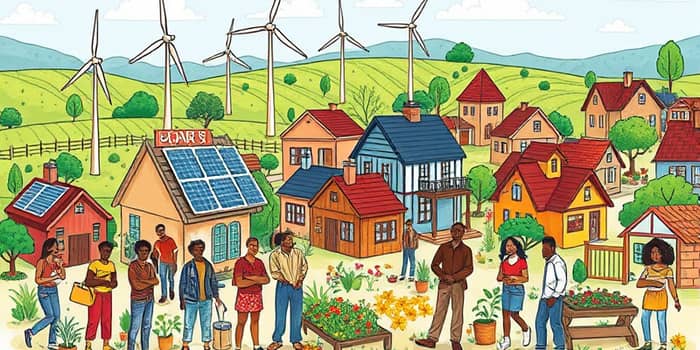
Every community holds untapped potential to drive positive change. By channeling resources directly into local projects, residents can address systemic inequities through local investment and build brighter futures for generations to come. Community-led sustainable investments create a powerful ripple effect, transforming neighborhoods into thriving centers of resilience and prosperity.
This article explores how you can join the movement of community investors, empowering underserved areas with innovative financing strategies that yield both social and environmental returns. Discover practical steps, inspiring case studies, and essential tools to begin your journey toward build generational wealth and resilience while making a meaningful difference.
Community-led sustainable investing focuses on directing capital to areas often overlooked by traditional finance. Projects can range from affordable housing developments and renewable energy to community centers, small business support, and urban green spaces. By prioritizing local decision-making, these investments ensure funds address the most pressing needs identified by residents themselves.
Unlike conventional philanthropy or top-down development initiatives, community-led models entrust stakeholders with ownership and governance, fostering deep engagement and accountability. This approach not only create vibrant and sustainable neighborhoods but also nurtures civic pride, economic diversification, and environmental justice.
Successful community-led investments rest on foundational values that guide decision-making and build trust among participants. Understanding these principles helps align projects with local aspirations and maximizes impact over the long term.
First, cultivate genuine participation. Engage residents through town halls, surveys, and steering committees that reflect the community’s demographic and cultural makeup. Transparent communication and shared governance structures like Community Benefit Societies or local cooperatives ensure that voices are heard and respected.
Second, emphasize equity in benefit sharing. Prioritize projects that deliver tangible improvements in health, education, green infrastructure, and economic opportunity. When communities see direct returns—whether through job creation, affordable services, or improved environmental quality—they become champions for further growth.
Third, embed sustainability at every stage. From energy-efficient building design to renewable energy generation and urban agriculture, integrating environmental considerations enhances resilience against climate change and reduces operational costs.
Various strategies and financial vehicles enable individuals and institutions to participate in community-led sustainable projects. Each option offers different risk-and-return profiles, minimum investments, and impact characteristics.
This table outlines common vehicles and their features. Many instruments are federally insured or regulated, ensuring stability while delivering measurable social and environmental outcomes.
Across the globe, communities have harnessed these tools to spark transformation. In South Carolina’s Deep South, a community credit union launched a transformational deposit campaign to fund homeownership, entrepreneurship, and climate resilience programs. Over time, residents experienced improved financial health and increased access to essential services.
In Scotland, a rural village achieved 28.3% community ownership of a windfarm through a partnership with a developer, reducing energy costs locally while generating revenue for community projects. Similarly, Connecticut Green Bank’s crowdfunded Green Liberty Notes invited small investors to back clean energy installations, demonstrating how even modest contributions can scale nationwide.
These examples showcase how local vision, combined with innovative finance, can yield lasting benefits—reducing carbon footprints, expanding educational opportunities, and strengthening neighborhood cohesion.
Rigorous impact measurement is essential for credibility and continuous improvement. Establish key performance indicators (KPIs) that track social outcomes—such as jobs created, affordable units developed, or greenhouse gas reductions—and financial metrics like default rates and repayment schedules.
Regular reporting builds trust among investors and stakeholders, opening doors to additional funding and scaling opportunities. Tools such as the IRIS+ framework or Sustainable Development Goals mapping can align local projects with global benchmarks.
To amplify reach, forge partnerships with regional CDFIs, philanthropic foundations, and municipal agencies. Shared resources and cross-promotion can catalyze further investment and inspire neighboring communities to replicate successful models.
Community-led sustainable investments offer a compelling avenue to combine financial returns with profound social and environmental benefits. By mobilizing local knowledge, financial ingenuity, and collaborative governance, communities can reduce carbon emissions and inequality while creating wealth and opportunity.
Whether you’re an individual investor, a nonprofit leader, or a local official, the time to act is now. Embrace these strategies, champion local ownership, and measure your impact rigorously. Together, we can transform neighborhoods into beacons of resilience and ensure that every community thrives—today and for generations to come.
References