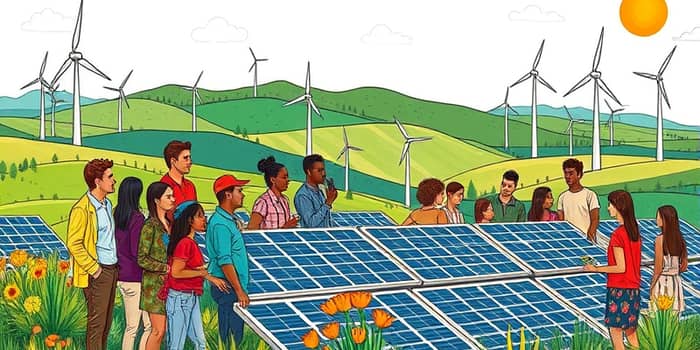
In an era of escalating environmental and economic challenges, the ancient idea of the commons as shared resource management is experiencing a powerful renaissance.
This concept, which encompasses everything from public parks to digital platforms, invites us to rethink how we fund and foster collective assets for the common good.
By shifting focus from sole ownership to collaborative investment models, we can build resilient systems that benefit all stakeholders and communities.
Traditional investing, epitomized by common stocks, has long dominated financial landscapes with its promise of individual gains.
However, as we face issues like climate change and infrastructure decay, new approaches are emerging that prioritize shared stewardship.
To appreciate the shift towards commons financing, it's essential to grasp the basics of common stocks.
These securities grant investors a stake in company decisions and profits, but with significant exposure to market fluctuations.
A comparison with other instruments like bonds and preferred stock reveals key trade-offs in risk and return.
This table underscores why common stocks, while valuable for diversified portfolios, may fall short in addressing shared resource sustainability challenges that demand collective action.
As we move forward, innovative models are reshaping how we invest in communal assets.
The commons refer to resources that are collectively used and managed, such as natural ecosystems or public utilities.
Financing these assets requires approaches that prioritize collaboration over competition for long-term viability.
Key areas where shared resources can be leveraged to cut costs and enhance efficiency include:
By investing in these commons, businesses and communities can achieve significant savings while fostering innovative community-driven projects that benefit all.
To implement shared resource models, various partnership structures have proven effective in real-world scenarios.
These formats enable collective governance and conflict resolution mechanisms, ensuring resources are managed sustainably and equitably.
For instance, in the Queen Alia International Airport project, a 25-year PPP incorporated Islamic finance co-financed with conventional debt.
Beyond traditional partnerships, several cutting-edge models are driving commons investment forward with creativity.
Crowdfunding has emerged as a powerful tool, with variants tailored to different needs and scales:
Blended finance combines public and private capital to fund projects with social impact, such as renewable energy in underserved areas.
Other mechanisms include revolving funds, Contracts for Difference (CfD), and third-party financing through energy performance contracts.
These models help mobilize capital for sustainable development initiatives worldwide without excessive ownership dilution.
Concrete examples demonstrate the tangible benefits of investing in shared resources across the globe.
These cases highlight how innovative financing can transform local economies and enhance environmental stewardship for future generations.
For those eager to participate, here is a straightforward guide to get started on this transformative journey:
By following these steps, you can contribute to building resilient shared asset networks that endure through challenges and opportunities.
While commons investing offers numerous advantages, it's not without challenges that require careful management.
Key benefits include shared costs, expanded customer bases, and reduced risks for new ventures and innovations.
However, governance issues and potential conflicts demand transparent and inclusive decision-making processes.
A balanced approach involves proactive strategies to ensure success:
This proactive stance helps mitigate risks while harnessing the power of collective action for sustainable growth and resilience.
Looking ahead, commons financing is poised to play a crucial role in global sustainability efforts and economic transformation.
Trends such as increased use of blended finance for clean energy and the growth of digital platforms for resource sharing are gaining momentum.
Metrics like return on investment from energy savings are becoming standard, driving more informed and impactful financial decisions.
By embracing these trends, investors can pioneer a new era of responsible capitalism that values community and environment alike.
Investing in the commons is more than a financial strategy; it's a commitment to fostering shared prosperity and resilience.
By moving beyond traditional stocks to support collaborative models, we can address pressing global issues with innovation and empathy.
Start today by exploring partnerships or contributing to a community project, and be part of the movement towards sustainable resource management that benefits all.
Together, we can build a future where finance serves not just individuals, but the collective good for generations to come.
References