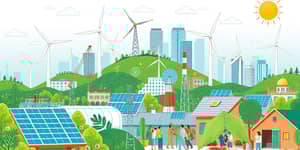
As the world strives to meet ambitious climate goals and power a digital future, renewable energy infrastructure emerges as the linchpin for sustainable growth. Investors, policymakers, and communities alike stand at the threshold of an era defined by green technologies and resilient grids.
With global clean energy investment reaching roughly USD 2.2 trillion and annual requirements soaring toward annual investment of $4.5 trillion through 2030, the opportunity to generate impact and returns has never been greater.
Renewable energy now accounts for about USD 780 billion of global clean energy spend. In the United States alone, the 2025–2030 window reveals $1.4 trillion in energy infrastructure opportunities. Solar dominates, with projected investments of USD 450 billion in 2025 and renewables supplying 92.5% of new global power capacity.
Across continents, governments are mobilizing capital to meet rising electricity demand driven by AI data centers, electric vehicles, and reshoring of energy-intensive manufacturing. According to the International Energy Agency, data centers could represent nearly half of U.S. electricity demand growth through 2030.
Three primary forces propel this momentum:
Together, these drivers create a compelling case for swift, large-scale deployment of renewables and grid modernization projects.
Utility-scale solar and wind projects stand at the forefront, benefiting from federal incentives like production tax credits (PTCs) and investment tax credits (ITCs) under the Inflation Reduction Act. Projects beginning construction by mid-2026 qualify for these benefits, prompting a development surge.
Onshore wind leads renewable additions globally, with cumulative capacity expected to climb 45% to 732 GW between 2025 and 2030. Offshore wind, especially off the U.S. East Coast, offers attractive long-term prospects despite higher capital requirements and regulatory complexities.
Meanwhile, nuclear energy receives renewed interest, particularly in small modular reactors (SMRs). Venture capital flows toward SMR developers, while life extensions for traditional plants create niches for specialized engineering and construction firms.
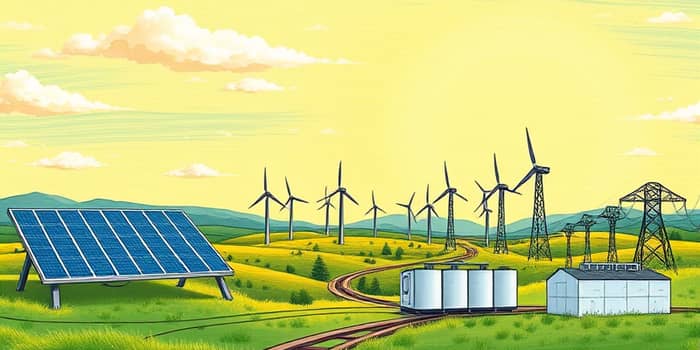
Distributed generation also shines. Behind-the-meter solar paired with battery storage grants customers energy independence, eases transmission loads, and drives cost savings.
Energy storage has become indispensable for grid stability and renewable integration. By October 2025, U.S. operating storage capacity reached 37.4 GW, up 32% year to date, with another 19 GW under construction and a 187 GW pipeline by 2030.
Over half of projects coming online by 2026 pair storage with solar, particularly in southwestern states. Pumped storage hydropower is regaining attention for rapid response to demand fluctuations and essential grid services.
Grid infrastructure demands the most capital. Transmission projects often span 10–15 years from planning to completion, and experts estimate a 60% expansion in capacity is required to meet decarbonization goals. The IEA posits that global grid capacity must double within 15 years.
Without sufficient interconnection, up to 1,500 GW of renewable projects may face delays, risking missed climate targets and higher energy prices. Europe alone needs up to EUR 1.4 trillion for grid upgrades by 2035.
Government frameworks underpin investor confidence and project viability. Key programs include:
State-level policies vary: 28 states with renewable portfolio standards drove 37% of U.S. additions in 2024, but some are revisiting targets under economic pressures.
Recent financing trends show a 41% drop in deal value for renewable projects in early 2025, yet platform acquisitions surged, reflecting a pivot toward scale and talent. Investors can choose from multiple vehicles:
Operating assets with safe-harbored tax credits remain prime targets, while capable development teams backed by scalable delivery infrastructure attract financial buyers seeking long-term stability.
The renewable energy infrastructure landscape is rich with opportunity. From utility-scale projects to distributed generation, from grid modernization to innovative financing, stakeholders can align financial returns with societal impact.
By harnessing policy incentives, targeting high-growth segments, and collaborating across public and private sectors, investors and developers can build a resilient, low-carbon energy system. Together, we can power economies, protect the planet, and leave a lasting legacy for future generations.
References