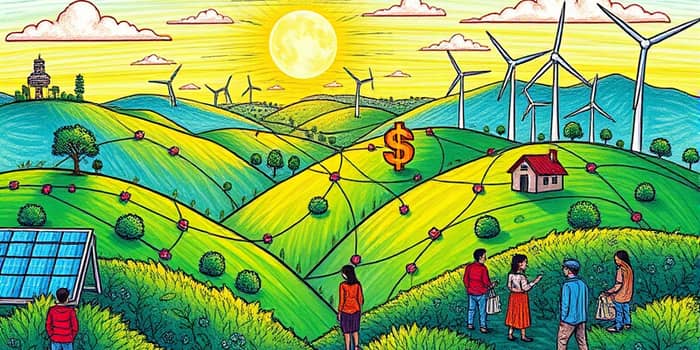
Green fintech represents a powerful convergence of finance and technology, redefining how capital flows to eco-friendly initiatives. These advancements empower individuals and institutions to support environmental goals.
By harnessing cutting-edge tools and data, this emerging field accelerates the transition to a low-carbon future. Through innovation, green fintech builds bridges between investors and tangible climate solutions.
At its core, green fintech, also called sustainable fintech, leverages financial technology to promote environmental goals. It channels capital toward clean energy projects, carbon reduction initiatives, and nature-based solutions.
This discipline integrates technologies such as AI, blockchain, and advanced data analytics with sustainable technological solutions to address climate change. Green fintech fosters environmental sustainability and low-carbon transitions by enabling transparent and efficient financing mechanisms.
The green fintech landscape encompasses diverse applications that lower barriers and enhance impact. Key innovations include:
Together, these innovations drive transparent investment flows and enable stakeholders worldwide to participate in sustainable finance.
The green finance market is expanding at an unprecedented pace, fueled by regulatory support, investor demand, and technological advancements. Global sustainable finance issuance reached $1,539 billion in 2025, with projections estimating $28.71 trillion by 2033.
Forecasts suggest continued resilience despite macroeconomic headwinds, driven by institutional commitments and consumer preferences. Banks have increased green portfolios to over 30% of total assets, reflecting a long-term sustainable growth mindset.
Leading institutions and fintech startups illustrate green finance in action. Major banks like HSBC, Lloyds, and Barclays have launched digital hubs and lending programs dedicated to decarbonization projects.
On the fintech side, platforms such as Grünfin offer B Corp-certified sustainable ETFs, while Trine enables crowd-funded solar investments in emerging markets. Patch uses blockchain for carbon credit trading, and Bunq’s green card plants a tree for every purchase.
These case studies highlight how data-driven climate solutions and community engagement can drive impactful outcomes. By combining rigorous reporting with accessible user experiences, these ventures set benchmarks for transparency and accountability.
As the sector matures, new pathways emerge for stakeholders to scale impact and deploy capital effectively. Key opportunities for 2026 include:
Stakeholders who embrace these opportunities will lead the next wave of innovation and resilience in sustainable finance.
Despite promising trends, green fintech faces obstacles. Official development assistance is forecast to decline, and ESG backlashes may slow regulatory momentum. Quality assurance in sustainability-linked instruments remains critical.
However, technology provides solutions to combat greenwashing risks and enhance investor confidence. By leveraging blockchain for immutable records and AI for real-time risk modeling, green fintech can uphold rigorous standards and foster trust among all participants.
Green fintech stands at the forefront of the transition to a zero-carbon economy. Through collaborative ecosystems of banks, startups, and regulators, it unlocks new capital flows to critical climate solutions.
By embracing innovative digital tools and prioritizing transparency, users at every level can contribute to a more resilient planet. The future of finance is sustainable, inclusive, and driven by purpose—green fintech makes that future possible.
References