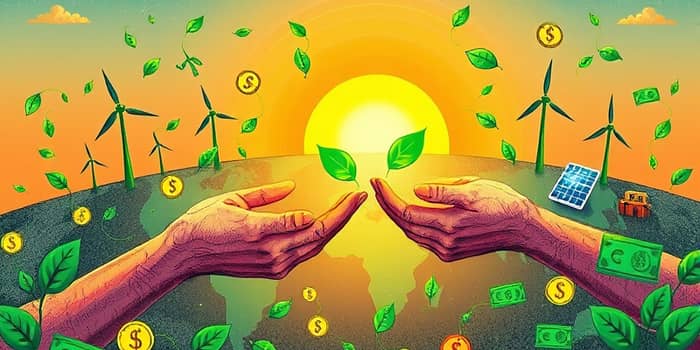
In an era defined by climate urgency and social responsibility, green finance emerges as a beacon of hope. From burgeoning investment flows to groundbreaking financial instruments, this movement is transforming how capital meets purpose.
Global sustainable finance markets are experiencing explosive growth driven by ESG demand. Projections point to trillions of dollars in new assets as investors, corporations, and policy makers align on a shared vision for a resilient planet.
Leading research estimates vary, but consensus highlights remarkable expansion:
These figures reveal a massive influx of green capital into sectors ranging from renewables to sustainable agriculture, underscoring finance’s role as a catalyst for environmental progress.
Several forces are propelling this expansion. As policies tighten around carbon and investors demand transparency, new opportunities emerge across diverse asset classes.
In industry verticals, utilities and power top volumes at 22.9%, transport and logistics innovate with green fleets, and finance institutions pledge hundreds of billions for transition projects.
Beyond traditional bonds, financiers are crafting novel structures to channel capital where it matters most. This evolution reflects a unprecedented collaboration across finance sectors.
These products, backed by rigorous standards and digital verification, ensure that every dollar advances measurable environmental and social outcomes.
As we approach 2026, experts predict a shift from promises to tangible action. Several trends will define this pivotal year:
Additionally, initiatives like blended finance standards and taxonomy harmonization will streamline investment flows, reducing fragmentation across 50+ regional taxonomies.
Despite momentum, headwinds persist. Cuts in public climate finance threaten progress, and the complexity of adaptation metrics stalls deployment of critical funds. Addressing these barriers demands policy frameworks driving sustainable projects and cross-sector cooperation.
Key actions for stakeholders include:
Practical steps—such as adopting digital platforms for bond issuance or integrating climate risk assessments into corporate lending—can accelerate adoption at scale.
The green finance revolution is more than a trend—it’s a societal shift toward valuing natural capital, resilience, and long-term prosperity. By embracing innovative financial products for resilience and forging partnerships across borders, we can direct the river of capital toward a thriving, low-carbon future.
Whether you’re an investor seeking sustainable opportunities or a policy maker shaping the next regulatory wave, your role is vital. Together, we can unleash the full potential of green finance and ensure that our planet’s wellbeing is at the heart of every financial decision.
References