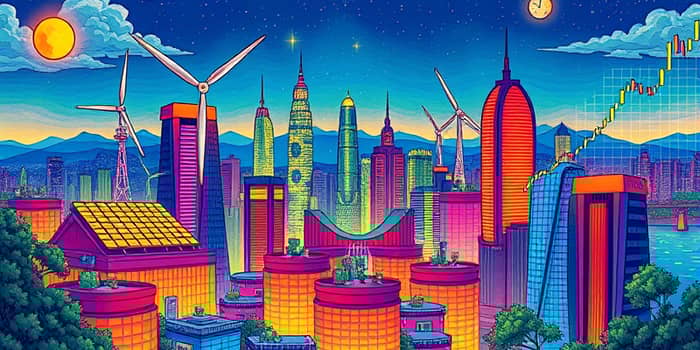
Climate change is no longer just a looming threat; it has evolved into one of the most significant investment opportunities of our era. By reframing environmental risks through a strategic lens, investors can unlock substantial returns while driving positive global change. The transition to a low-carbon economy presents unprecedented potential for innovation and prosperity.
As we approach 2026, the urgency to address climate challenges is matched by the rapid acceleration of technological and financial solutions. This convergence creates a fertile ground for forward-thinking investors to capitalize on emerging high-growth sectors. Energy transition and scalable clean tech are at the forefront, transforming what was once perceived as risk into a source of economic vitality.
The narrative is shifting from mere mitigation to dynamic opportunity, with climate finance vehicles and risk-transfer mechanisms paving the way for scalable investments. Investors increasingly recognize that sustainable strategies are not only ethical but also economically viable. Dispatchable carbon-free energy is poised to dominate markets, driven by rising demand from data centers and evolving grid constraints.
2026 is predicted to be a pivotal year for climate investments, with several key trends emerging that redefine risk and reward. The focus is on firm, dispatchable, and scalable carbon-free energy sources capable of meeting the growing power needs of industries like AI and cloud computing.
These technologies are not just reducing carbon footprints but also creating lucrative investment pipelines that attract both private and public capital. The momentum is bolstered by societal shifts and technological advancements that persist despite policy uncertainties.
Companies like Fervo Energy in geothermal and startups in nuclear sectors are likely candidates for public offerings, signaling robust market confidence and investor appetite.
The investment landscape for 2026 is rich with diverse opportunities across multiple sectors, each driven by unique technological breakthroughs and market demands.
Fusion energy, while still years from grid-scale, is receiving increased federal support, with startups making strides toward net energy gain. The table below summarizes key sectors and their projected impacts for 2026.
To deploy the $3-9 trillion annually needed through 2050, financial innovations are crucial for balancing risk and return, making climate investments more attractive and accessible.
These mechanisms help bridge the capital gap and ensure that sustainable projects can scale effectively, competing with global leaders and fostering economic resilience.
These innovations are essential to mobilize capital at scale, turning financial challenges into opportunities for growth and stability.
The market for climate investments is expanding rapidly, with several notable trends shaping the global landscape and driving investor confidence.
The intersection of AI and clean energy, often termed Green AI, is creating new opportunities, with top stocks in this nexus poised for significant growth in 2026.
While challenges such as physical climate impacts and policy shifts exist, they can be transformed into opportunities with strategic approaches and innovative thinking.
Investors who proactively address these headwinds can unlock value in adaptation and resilience sectors, turning potential setbacks into catalysts for progress.
Regional focus areas include the US for data centers and grants, Asia-Pacific for energy transition leadership, and emerging markets for climate finance vehicles. Startups to watch, like Fervo and Redwood Materials, are at the forefront of innovation and market disruption.
Climate change presents a unique convergence of risk and reward, offering a pathway to build a more sustainable and prosperous world through informed investment.
By embracing the technologies and financial tools of tomorrow, we can turn environmental challenges into economic triumphs, fostering resilience and growth for generations to come.
The journey from risk to opportunity is not just possible; it is inevitable with the right strategies in place, inspiring a global shift towards a greener, more equitable economy.
References