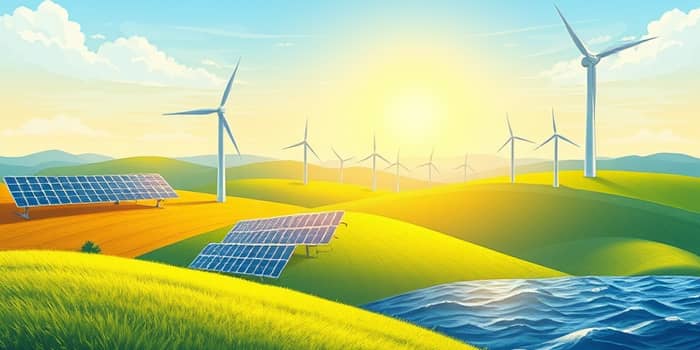
In 2025, humanity stands at a crossroads. After centuries dominated by coal, oil and gas, we are witnessing a profound shift. This guide illuminates the path from black smoke to clean, sustainable power—empowering communities, economies and individuals alike.
For the first time ever, renewable energy has produced more electricity than coal. In the first half of 2025, global electricity demand rose 2.6%, and solar and wind met this growth head-on. Solar generation surged by 31% while wind climbed 7.7%, delivering an extra 306 TWh from the sun alone.
This milestone marks a transition from fossil fuels to renewables that decades of policy and investment have built toward. It underscores how collective action, technology advances and shifting markets can converge to alter our energy landscape at unprecedented speed.
2024 was a record-breaking year. The world added approximately 600 GW of solar capacity and 125 GW of wind capacity, while grid storage installations nearly doubled to 170 GWh. This represents a 17% increase in renewable additions compared to 2023, and more solar capacity has been installed since 2022 than in all previous years combined.
Early estimates for 2025 suggest annual capacity additions could reach 1,000 GW before 2030, driven by a 60% year-on-year leap in solar and wind during the first half of the year.
China leads the charge, delivering nearly two-thirds of global solar and wind additions since 2022 and three-quarters in early 2025. It now holds almost a quarter of the low-emissions power needed for its 2050 targets—nearly twice the global average.
In the United States, 2024 saw roughly 40 GW of new solar and wind capacity, a 60% rise over 2022. While the first half of 2025 plateaued, states such as Arizona, Georgia, Ohio and Texas grew installations by 15–80%. Europe’s overall momentum dipped, but Spain and France boosted capacity by 35% and 25% respectively.
Emerging economies matched EU additions in early 2025, led by India’s rapid build-out. Across 79 countries, renewable consumption grew in 75 nations between 2017 and 2024—proving that clean energy is not just a wealthy nation’s luxury but a global imperative.
A successful transition requires clear policies, economic support and community engagement. The United Kingdom accelerated coal phase-out through market reforms in 2013, favoring renewables over gas. Germany’s coal exit law mandates a 2038 phase-out, backed by €41.09 billion in just-transition funding for affected regions.
These examples show that targeted investments and clear timelines unlock private capital and foster social buy-in—turning policy into tangible progress on the ground.
The COP28 target calls for tripling renewable energy capacity globally by 2030 to 11,000 GW. Meeting this goal demands adding an average of 950 GW annually—nearly doubling current record-setting years.
Under ambitious climate scenarios, solar generation in Africa could grow 100-fold and wind up to 60-fold by mid-century. These projections highlight the vast opportunity and urgency of scaling infrastructure, grid modernization and storage solutions.
Building a resilient, low-carbon energy system rests on multiple pillars. Strategic investment must be paired with innovation, efficiency and robust policy frameworks.
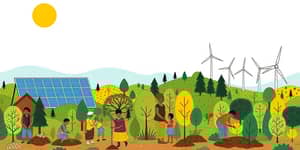
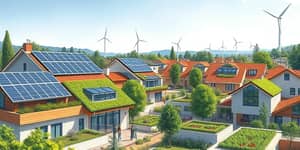
Every individual and organization has a role. Homeowners can install solar panels or switch to green tariffs. Businesses can adopt energy-efficient technologies, electrify fleets and commit to renewable procurement. Communities can advocate for local wind or solar projects and support policies that accelerate clean energy deployment.
By aligning personal choices with global goals, consumers drive market demand, attract investment and send a clear signal: the future of energy is renewables, not fossil fuels.
From record-breaking solar installations to historic milestones in clean power, the transition guide laid out here reveals both the scale of the challenge and the magnitude of opportunity. As governments, businesses and individuals rally behind renewables, we stand on the brink of a more equitable, secure and sustainable energy era.
Let us seize this moment—accelerating deployment, fostering innovation and ensuring a just transition for all. Together, we can turn the page on fossils and write a new chapter powered by the sun, wind and human ingenuity.
References