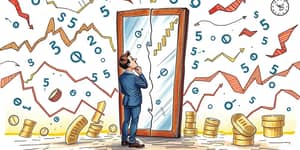
The choices we make every day can be guided as much by subtle cues in language as by the facts themselves. The framing effect—
cognitive bias where people react differently to logically identical information—reveals how our minds latch onto the way ideas are presented. By shifting the spotlight from content to context, frames wield invisible power over our thoughts, emotions, and actions.
Imagine a doctor describing a surgery with a 90% success rate. Patients feel reassured. Now imagine the same procedure described as having a 10% failure rate. Anxiety surges, even though the outcome statistics are identical. This is framing at work: the same information framed differently transforms perception.
Frames operate as mental filters, emphasizing certain aspects of reality while downplaying others. They shape our interpretation of risks, benefits, and moral judgments without altering the underlying data.
To understand why frames exert such sway, we turn to prospect theory, proposed by Daniel Kahneman and Amos Tversky. Its core insight: people weigh losses more heavily than gains. This principle—Loss aversion makes losses feel larger—means a negative frame often carries more emotional weight than a positive one.
Key tenets of prospect theory include:
Framing effects are not confined to laboratories—they permeate healthcare, finance, politics, and everyday consumer decisions. Consider these classic scenarios:
In the famed Asian Disease problem, participants chose the same statistical outcomes at vastly different rates depending on whether the scenario was framed as lives saved or lives lost: 72% chose safety when gains were highlighted, but only 22% did so when exposed to loss framing.
Susceptibility to framing changes across the lifespan. Young children rely on quantitative reasoning, while elementary-aged kids start to think in “gist,” focusing on overall meaning. Adolescents begin weighing risk and reward but, lacking life experience, are still swayed more by frame than by probability. Adults, especially older adults, often revert to less demanding cognitive shortcuts and become more frame-sensitive.
Expertise offers some defense. Senior economists exhibit smaller framing effects than their junior counterparts, indicating that deep knowledge can blunt framing’s edge. Similarly, clear endorsements from trusted authorities can neutralize framing biases altogether.
With great power comes great responsibility. Framing can inform and empower or mislead and manipulate. Ethical communicators weigh the moral implications of emphasizing particular angles. In healthcare, for instance, transparent framing ensures patients make informed decisions rather than being nudged toward a chosen outcome.
In politics, strategic “spin” may mobilize supporters but risks eroding trust when citizens discover they were influenced more by rhetoric than reality. Marketers and journalists alike must ask themselves: Is this frame illuminating truth or obscuring it?
When we recognize frames at play, we can adopt practical tactics to make clearer, more rational choices:
By consciously examining how options are worded, we reclaim autonomy over our decisions and guard against subtle persuasion.
Framing influences multiple domains:
Rather than demonizing frames as mere biases, we can view them as essential cognitive tools that help us navigate complexity. Frames allow us to focus on relevant aspects of overwhelming information. The challenge lies in using them ethically and recognizing when they steer us away from our best interests.
By cultivating frame-awareness and critical thinking, we harness the power of presentation without surrendering to it. In doing so, we empower ourselves and others to make decisions grounded in both clarity and conscience—transcending the subtle sway of words to honor the substance that truly matters.
References