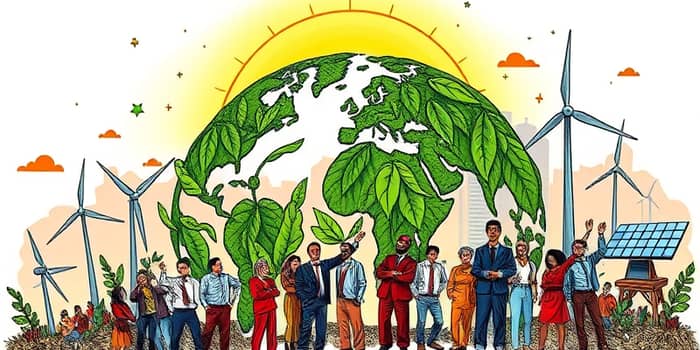
The landscape of global finance is undergoing a profound transformation. Driven by policy milestones, record investments, evolving regulations, and innovative instruments, the sector is shifting decisively toward sustainability. Despite political headwinds and uneven private flows, the momentum behind green bonds, transition finance, and adaptation strategies is reshaping markets and charts a course for a resilient future.
Between 2024 and 2025, the world witnessed record clean energy investments globally, with green bonds and loans hitting all-time highs. Sustainable finance issuance outside asset-backed securities reached US$1,668 billion in 2024, only dipping modestly to US$1,539 billion in 2025. While U.S. public climate funding saw cuts and ESG regulations faced rollbacks, Europe and Asia maintained strong momentum.
Corporate pullbacks were notable in 2025: U.S. sustainable debt fell 36% year-on-year to US$94.7 billion, and EMEA issuance declined 12.2% to US$303.7 billion. Yet green loans surged to US$92.4 billion, reaffirming market trust in labeled finance for emissions reductions. Overall, sustainable debt markets contracted ~20%, but green bonds remained resilient, reflecting investor confidence in genuine climate impact.
Sustainable finance issuance is set to rebound, with total volumes projected at US$1,621 billion. Green bonds may hit US$700 billion, while green loans could climb to US$255 billion. Amid these trends, six strategic areas stand out for catalyzing transformative growth:
A global paradigm shift is under way in regulation. The ISSB’s IFRS S1 and S2 standards have gained wide acceptance, integrating sustainability disclosures with financial reporting. The EU’s CSRD is aligning with ISSB, driving the need for high-quality global sustainability standards and audit-ready data processes.
Meanwhile, SFDR 2.0 has institutionalized transition finance categories, boosting confidence among both retail and institutional investors. Taxonomy harmonization, cemented at COP30, seeks to streamline over 50 local frameworks into coherent global principles, reducing confusion for issuers and enhancing transparency in high-emitter sectors.
Transition finance is poised for a breakout, as high-emitting industries respond to policy triggers like the EU CBAM and national phase-out conferences. Labeled loans and bonds aligned with decarbonization pathways are gaining traction, despite earlier hesitations.
Despite buoyant private markets, public finance cuts and political backlash have created headwinds. Net-zero alliances in some regions have shuttered, even as new coalitions relaunch elsewhere. Sustainability-linked bonds struggle with weak KPIs and inadequate penalty structures, raising questions of credibility.
Regulatory complexity remains a barrier, with data infrastructure and reporting platforms still catching up. Most critically, an execution gap persists: pledges far outpace actual deployment of capital. Urgent execution focus on deployment is essential to translate ambition into measurable impact.
As we look to the coming decade, broader fiscal and public finance reforms will underpin the transition. Investor theses are evolving beyond short-term yields toward capacity building and risk mitigation in a warming world. Top trends—from blended finance efficiency to AI-driven energy solutions—underline the need to balance near-term and long-term perspectives.
Growth drivers include the unwavering commitment of corporates, enhanced policy frameworks, and the rise of transition-specific instruments. The maturation of climate capital markets will depend on continued innovation in taxonomies, standardized metrics, and verifiable impact reporting.
Ultimately, the paradigm shift in sustainable finance is about more than numbers: it is a decisive move toward an economy that valorizes natural capital, social resilience, and intergenerational equity. By embracing proven strategies and bridging the deployment gap, stakeholders can catalyze transformative climate investments that protect our planet and deliver enduring value. The path ahead is challenging, but the foundations are in place for a truly resilient and inclusive financial future.
References