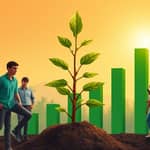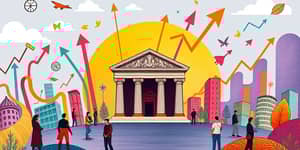
Economic growth is more than numbers on a report—it reflects the collective success of innovation, investment, and policy across society. This article unpacks the core concepts, ingredients, and institutional frameworks that drive sustained growth, and offers practical insights for fostering prosperity.
At its heart, economic growth is defined as an increase in real GDP per capita, showing both higher output and improved living standards. Real GDP measures total production adjusted for inflation, while per capita figures account for population changes.
Economists distinguish long-run growth from short-term expansions by focusing on productivity—output relative to inputs—rather than temporary demand boosts. Key concepts include:
Economic growth arises in two primary forms. Extensive growth relies on expanding inputs—more labor, land, or capital—while intensive growth depends on using resources more efficiently. Extensive approaches face diminishing returns without productivity improvements, making sustained intensive growth essential for long-term prosperity.
Growth is powered by a combination of capital, people, and ideas. The aggregate production function highlights three core inputs:
Additional supporting factors include resource availability, labor market dynamics, and short-term demand conditions. However, long-run expansion depends on continuous improvements in technology and skills.
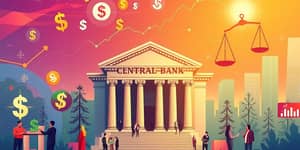
Institutions set incentives and shape the environment in which businesses and individuals operate. Well-designed institutions foster competition, ensure fair enforcement of contracts, and channel savings into productive investment. Key elements include:
Strong financial systems that allocate capital efficiently, market-oriented policies that encourage innovation, and transparent governance that builds trust. Countries with stable institutions and open markets tend to experience faster convergence toward high-income status.
The modern era of sustained growth began in the mid-19th century, driven largely by the industrial revolution and waves of innovation. In the United States, for example, 60% of consumer spending in 2013 was on goods and services introduced after 1869, underscoring the power of continual invention.
Compounding effects amplify small annual differences: a nation growing at 3% per year doubles its per capita income in just over 24 years, while a 2% pace takes 35 years. This mathematical reality explains the vast disparities among countries over generations.
Real-world examples illustrate diverse paths to growth:
Looking ahead, sustainability demands balancing economic expansion with environmental stewardship and social equity. Innovations in renewable energy, digital technologies, and circular economies are rewriting the growth narrative, ensuring that progress benefits all.
Practical steps for policymakers and stakeholders include:
By recognizing the interconnected nature of capital, labor, and ideas, decision-makers can cultivate environments where innovation flourishes, productivity accelerates, and prosperity becomes inclusive. Economic growth, when guided by thoughtful policies and sustainable practices, remains the most powerful engine for raising living standards worldwide.
References