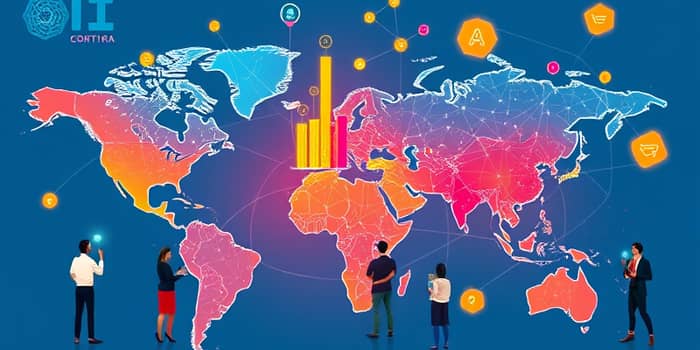
As the world economy enters 2026, uncertainty and opportunity stand side by side. By understanding emerging patterns, you can turn shifting headwinds into profitable tailwinds.
Leading institutions from Visa to the IMF offer contrasting views on 2026 growth. Estimates range from a cautious 0.4% to an optimistic 3.3%. These disparities reflect evolving trade policies, rapid AI investment, and demographic shifts.
Rather than seeing forecasts as conflicting noise, you can treat them as lenses that highlight different aspects of a complex reality. Learning to interpret those lenses is your first step toward seizing strategic advantage.
Across sectors, small businesses outpace consumers in AI use. From transaction processing to predictive analytics, AI integration is boosting productivity and profit margins.
However, with record-high tech spending comes the risk of a speculative bubble. Prudence demands you focus investments on firms with solid use cases and sustainable business models.
Tariffs and supply chain realignments are reshaping global commerce. Regional trade now accounts for two-thirds of growth as firms shorten supply chains to reduce risk.
Mexico’s manufacturing sector provides a compelling example: post-USMCA repositioning has driven nearshoring gains, with GDP growth projected at 1.6%. Meanwhile, Europe and Asia adapt to reduced Chinese exports through diversified partners.
Policymakers are pivoting toward investment-led growth over consumption. In the United States, tariff revenues are funding consumer stimulus, while Germany boosts defense spending and China rolls out industrial subsidies.
Rate cuts and expanded budgets are creating a slightly positive global impulse, though high debt levels suggest caution. The balance between fiscal expansion and eventual consolidation will be a key determinant of medium-term growth.
Aging populations in the Eurozone and Japan contrast with relatively younger demographics in the United States and parts of Southeast Asia. These trends affect labor supply, consumption patterns, and social spending priorities.
At the same time, BRICS nations are exploring cross-border tokenized payment rails, signaling a potential shift away from traditional dollar dominance. Such moves could reshape global finance and create new corridors for capital flow.
Armed with a clear view of major drivers, you can chart a course that leverages emerging strengths and hedges against risks. Consider these strategies:
No forecast is infallible. The range from Deloitte’s cautious outlook to the IMF’s optimistic estimate underscores the need for flexibility. Build portfolios and business plans that can adapt if trade tensions escalate or if AI spending outpaces expectations.
Stress-test scenarios for lower-than-expected growth in China, or a sharper tariff increase, and maintain liquidity buffers. At the same time, be ready to accelerate investments if monetary easing deepens or new subsidies arise.
The most successful investors and entrepreneurs cultivate a dual focus: they remain vigilant about macro-level shifts while maintaining deep insight into their chosen niches. This combination of broad perspective and specialized knowledge allows for swift action when windows of opportunity open.
Remember that long-term gains often emerge from measured, strategic moves. Avoid the temptation to chase every headline; instead, anchor your decisions in rigorous analysis, clear goals, and disciplined risk management.
2026 promises a mosaic of challenges and chances. By decoding diverse forecasts, aligning with core economic drivers, and implementing flexible strategies, you can profit from the upheaval and build momentum for sustained success.
Embrace a mindset of continuous learning. Seek out emerging data, engage with experts, and refine your approach. In a rapidly evolving global economy, adaptability and informed action are your greatest assets.
References