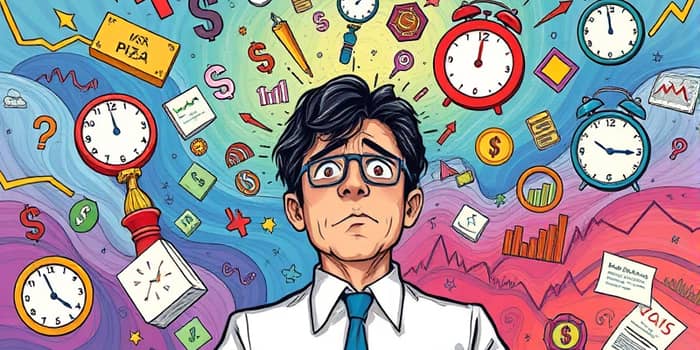
In our modern financial landscape, investors are bombarded with dozens of decisions every day. From choosing which app to use for trades to evaluating complex mutual funds, each choice demands mental energy. Over time, this cumulative load can exhaust our ability to think clearly, leading to poor outcomes and regret.
Failing to recognize mental exhaustion can result in impulsive trades, procrastination, and an overreliance on default options. Understanding the roots of decision fatigue is the first step toward reclaiming control.
The prefrontal cortex, the seat of logic and self-control, has a limited reservoir of mental energy. After making many choices, this reservoir depletes, making each subsequent decision feel harder and more draining.
Just like muscles that tire after a workout, our cognitive resources weaken. When those resources run low, individuals experience ego depletion, where willpower falters and snap judgments become more likely.
Financial decision fatigue doesn’t only affect small daily purchases—it seeps into long-term planning, retirement strategies, and portfolio management. When mental energy is low, investors are vulnerable to mistakes that can erode wealth.
Under fatigue, investors may chase hot stocks without proper research, or abandon budget reviews altogether. These behaviors undermine long-term financial success by prioritizing immediate comfort over strategic planning.
Procrastination can delay KYC completion or SIP (Systematic Investment Plan) initiation, costing precious time for compounding returns. Likewise, an exhausted mind is more likely to stick with the same underperforming funds rather than explore better options.
The very nature of investing—high stakes, complex products, and ever-changing markets—demands sustained attention. Each decision, whether small or large, chips away at our limited cognitive supply.
High-stakes choices demand greater effort, while intricate financial instruments require deeper analysis, both accelerating the onset of fatigue. Leadership roles that involve frequent strategic calls or risk assessments face this strain most acutely.
In the digital age, micro-decisions compound the problem. Every transaction through a wallet app or UPI transfer counts as a choice. By day’s end, people can feel mentally drained, leading to late-night impulse purchases or rash market moves.
Poorer individuals often face more trade-offs in everyday life—food, shelter, utilities—which leads to quicker depletion of mental resources. A simple grocery run can become exhausting, leaving little willpower for planning savings or investments.
Executives and financial professionals also experience decision fatigue. After a day of high-level meetings and risk assessments, impulsive personal financial choices become more likely, illustrating how mental exhaustion can span both personal and professional spheres.
By simplifying choices and reducing friction, investors preserve mental energy for critical decisions. Automating routine actions—like monthly contributions—frees up bandwidth for strategic thinking.
Regular breaks and a good night’s sleep are more than luxuries—they restore cognitive resources. Even a brief walk or mindfulness session can replenish willpower and clarity.
Developing routines around decision-making, such as reviewing portfolios on the same day each month, creates familiarity and cuts down on daily trade-offs. Over time, this consistency breeds confidence and reduces regret.
Embrace systems that guard mental energy to ensure your financial choices are driven by strategy, not exhaustion. By understanding and mitigating decision fatigue, investors can stay focused on their goals and unlock the true potential of long-term growth.
Every step you take to streamline decisions today builds a stronger, more resilient financial future. Start small, stay consistent, and watch how preserving your mental resources leads to wiser, more fulfilling investing.
References