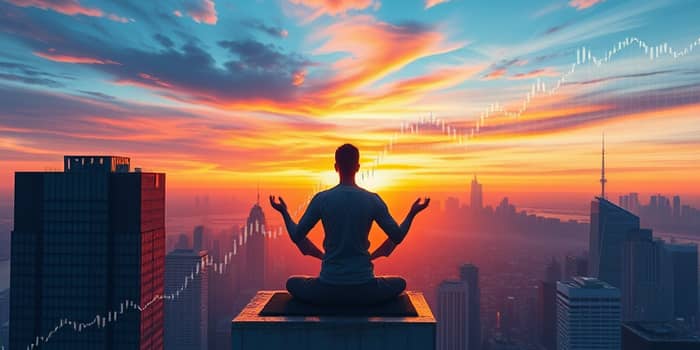
As financial markets fluctuate and investors grapple with uncertainty, adopting mindful practices can be a powerful antidote.
Recent market declines have been stark: U.S. equities slid by 2.9% in a single week, European stocks dipped 2.2%, and Japanese markets felt the strain with a 1.8% downturn. Such moves can trigger a cascade of emotions—anxiety, restlessness, even panic.
Economic tremors often amplify existing stresses. Younger generations, already facing burnout and climate anxiety, now contend with economic anxiety and burnout epidemics. Coupled with social media pressures, the result is a mental health burden few investors anticipated.
Mindfulness offers a pathway to stress reduction and emotional balance, equipping individuals to respond rather than react when markets tumble.
Over the past decade, digital meditation platforms have exploded in popularity, driven by demand for personalized digital meditation experiences and on-the-go accessibility. Investors in financial markets are turning to these tools for quick, guided respite.
Market data underscores this surge. In 2025, the global mindfulness meditation apps market is estimated at USD 2.69 billion, projected to grow at a 24.75% CAGR through 2028.
Meanwhile, broader meditation services are on track to reach USD 139.48 billion between 2026 and 2033, with a 12.5% CAGR. North America dominates current revenue thanks to high smartphone adoption, while Asia-Pacific leads in growth rate as mindfulness gains cultural traction.
This data highlights explosive growth in meditation apps as individuals seek calm amid chaos.
Several factors converge to fuel the mindfulness boom:
These drivers show that market turmoil often acts as a catalyst, prompting individuals to explore mindful solutions.
Understanding audience needs helps tailor approaches for investors under stress:
Fragmentation abounds: the top ten mindfulness players hold just 6% of total revenue, leaving space for niche innovations that address investor-specific stressors.
No journey is without obstacles. Key restraints include:
Recognizing these challenges empowers users and developers to co-create more inclusive, lasting solutions.
Practical steps can make calm a habit, not just a fleeting respite. Consider these approaches:
1. Micro-pauses during market hours: Five minutes of guided breathing can reset emotional responses during high volatility.
2. Scheduled daily practice: Commit to one consistent time slot—before opening trades or after logging performance reviews.
3. Leverage wearable prompts: Smartwatches can remind you to pause when heart rates spike, anchoring attention back to breath.
4. Group accountability: Partner with peers or join online communities to share experiences and reinforce commitment.
By layering these tactics, investors build psychological resilience to navigate ups and downs with equanimity.
Several leading apps illustrate transformative impact:
— Calm and Headspace report millions of hours of meditation logged weekly, with users noting significant reductions in reactive trading.
— Niche platforms like Smiling Mind partner with financial institutions to offer custom modules for portfolio managers.
— Corporate wellness programs integrating simple habit loops see employees reporting enhanced focus, less burnout, and improved decision-making under pressure.
Looking ahead, projections show the meditation ecosystem reaching USD 357.87 billion by 2033, driven by continuous innovation and rising global anxiety levels.
For investors, adopting practical mindfulness meditation techniques is more than a wellness trend—it’s a strategic edge. Cultivating calm transforms market turbulence from a threat into an opportunity for growth.
As markets continue to ebb and flow, mindfulness stands as a steadfast ally. By integrating these practices into daily routines, investors can foster clear thinking, emotional equilibrium, and lasting resilience. In this era of rapid change, calm isn’t passive—it’s the foundation of empowered, informed action.
References