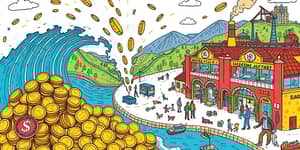
In economies around the world, the relationship between government spending and private sector vitality can feel like a delicate dance. When public funding surges, private enterprises may struggle for resources, leading to slower growth and fewer opportunities. Yet by understanding the forces at work—and harnessing targeted strategies—we can transform potential conflict into collaborative progress.
Crowding out occurs when government deficits compete for limited financial capital, pushing up real interest rates and diverting resources away from private firms. In a loanable funds market, public borrowing creates an elevated demand for funds that makes credit costlier for businesses seeking to expand.
When national saving remains constant, every dollar of government debt reduces capital available for entrepreneurs. Without a clear roadmap, this shift can stall innovation, dampen productivity and leave communities waiting for the next wave of investment.
Beyond graphs and tables, crowding out manifests in everyday lives. A small family-owned manufacturer may postpone hiring, a tech startup might shelve its expansion, and long-term research projects can languish for lack of funding. These setbacks ripple through neighborhoods, affecting:
When investment stalls, hope can wane. Yet with insight and action, we can restore momentum to private ventures that drive innovation and create jobs.
Not all government outlays lead to crowding out. By emphasizing productive public investment, policymakers can unlock new opportunities for private capital. Key strategies include:
These measures can transform fiscal policy from a rival of private enterprise into its most powerful collaborator.
How we fund public projects shapes their impact on private investment. Empirical evidence shows that debt-financed spending often exerts the strongest long-run negative pressure on business investment, whereas tax-financed projects can dampen private saving if levies fall on households. Balanced approaches that blend moderate borrowing with progressive, transparent taxation tend to yield the most sustainable results.
To counteract potential crowding out, governments and financial institutions can:
By widening the funnel of available resources, these actions reduce competition for core financial channels and invigorate the entrepreneurial spirit.
Everyone has a role in shaping a balanced fiscal ecosystem. Consider these practical steps:
Grassroots involvement ensures that public budgets reflect shared priorities and unlock lasting prosperity.
Imagine an economy where public and private investments move in harmony—where infrastructure lays the foundation for entrepreneurial breakthroughs, and businesses flourish on the momentum created by strategic government spending. This vision is within reach when we apply insight, creativity and collaboration to fiscal policy.
By prioritizing productive projects, diversifying financing methods and empowering citizens to engage, we can transform the narrative of crowding out into a story of crowding in—driving innovation, generating jobs and uplifting communities.
By understanding the mechanisms of crowding out and applying targeted solutions, policymakers, entrepreneurs and citizens together can chart a path toward inclusive, sustainable economic growth. It starts with informed dialogue, responsible budgeting and a shared commitment to harnessing public spending as a catalyst for private success. The future of our communities depends on balancing the scales—and turning every fiscal challenge into an opportunity for innovation.
References