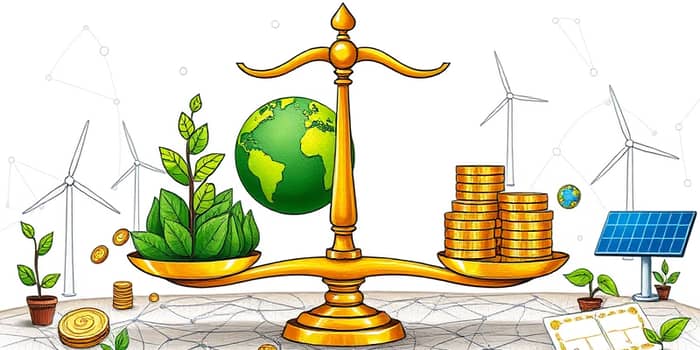
In today’s rapidly evolving financial landscape, investors and institutions are no longer content with purely monetary outcomes. They seek to understand how every dollar invested contributes to broader social and environmental goals. Measuring impact in sustainable finance is about moving beyond balance sheets and capturing true value beyond monetary returns.
Financial returns remain vital, but impact measurement introduces a paradigm that quantifies the social, environmental and economic effects of investments. By doing so, stakeholders gain clarity on whether their capital is fostering real-world transformation or simply generating profit.
This evolution demands transparency. Investors, regulators, and communities expect clear reporting frameworks that allow them to compare and contrast projects, holdings, and strategies. When organizations commit to measuring impact, they demonstrate accountability and build trust across stakeholders.
Several established frameworks guide this practice by providing standardized metrics, definitions, and reporting structures. Adopting a recognized approach ensures consistency and facilitates benchmarking.
Effective impact measurement integrates two views. Financial institutions focus on risk mitigation, ESG integration in portfolios, and alignment with corporate strategy. They evaluate metrics like ESG scores, carbon intensity, and risk-adjusted returns.
Communities and end-users, on the other hand, look for tangible improvements in their well-being: job creation, reduced pollution, and better access to essential services. By capturing beneficiary insights, investors can ensure their strategies deliver on promises.
Translating theory into action requires a clear roadmap. Organizations can follow these steps to embed impact measurement into their operations:
Two common methodological approaches shape impact estimates:
In addition, green bond issuers often use a harmonized reporting framework to disclose environmental impacts. Core principles include transparency around eligible projects and ex-ante estimates of expected annual results once projects reach steady-state operation.
One of the most compelling examples of sustainable finance in action is the collaboration between IKEA and ING Group. IKEA committed to becoming climate-positive by 2030, investing heavily in renewable energy assets. ING Group financed solar parks and wind farms across Europe, achieving a mutually reinforcing success story.
Through rigorous impact measurement, ING tracked carbon emissions avoided, energy generated, and community benefits such as local job creation. IKEA, in turn, demonstrated how corporate responsibility can align with profitable growth, inspiring other brands to follow suit.
Despite progress, several obstacles remain. Measuring intangible outcomes like enhanced community resilience or behavioral change is complex. Data quality can vary across regions and partners. Moreover, the lack of a universal impact standard hinders comparability.
Yet the industry is evolving. The Investment Leaders Group envisions a unified impact standard for all funds, enabling financial consumers to make informed decisions based on both risk-return profiles and sustainability footprints. Regulators, too, are stepping in with guidelines to ensure integrity and guard against greenwashing.
Impact measurement transforms finance from a transactional pursuit into a tool for positive change. By adopting robust frameworks, engaging stakeholders, and transparently reporting results, organizations can demonstrate genuine commitment to sustainability while maintaining solid financial performance.
As more investors embrace this dual mandate, capital will flow toward projects that not only yield strong returns but also leave a lasting legacy of social and environmental progress. In sustainable finance, the true bottom line extends well beyond profit—it encompasses the well-being of our planet and its people.
References