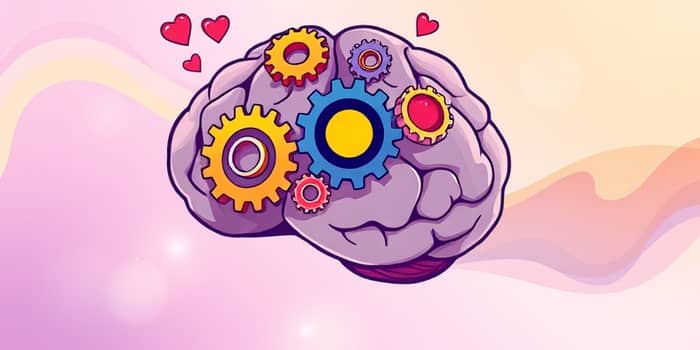
Behavioral economics explores how our minds shape financial and life decisions in surprising ways.
It reveals that psychological, cognitive, and social factors lead to predictable deviations from rational models.
This field transforms our understanding by showing that humans are not always logical calculators.
Instead, we often make choices based on emotions, habits, and biases.
By studying these patterns, behavioral economics offers tools to improve decisions in policy, finance, and daily life.
Key figures have laid the groundwork for this discipline through groundbreaking research.
Daniel Kahneman and Amos Tversky introduced prospect theory, which changed how we view risk.
They showed that risk attitudes depend on reference points, such as the status quo.
Richard Thaler expanded this with concepts like the endowment effect and nudges for better savings.
His work on the "Save More Tomorrow" program uses commitments to combat present bias.
Nobel Prizes awarded to these economists highlight the shift from assuming perfect rationality.
These contributions have made behavioral economics a vital part of modern economic thought.
Behavioral economics identifies numerous biases that affect our choices systematically.
These biases are grouped into themes like reference dependence, cognitive shortcuts, and time-related errors.
Understanding them helps explain why people often act against their own best interests.
For instance, losses hurt more than equivalent gains, a phenomenon known as loss aversion.
This leads to risk-averse behavior for gains but risk-seeking for losses.
These biases are not random; they follow consistent patterns that can be predicted and addressed.
This table summarizes how common biases manifest and can be leveraged for better outcomes.
Behavioral insights provide a framework for designing effective policies that account for human flaws.
These principles are distilled from research to address shortfalls in traditional economic models.
They emphasize that people are influenced by context, habits, and social dynamics.
For example, intrinsic motivation can be crowded out by extrinsic rewards in some cases.
Policymakers can use these insights to nudge behaviors without restricting freedom.
Applying these principles can lead to more successful programs in health, finance, and sustainability.
Behavioral economics has practical implications across various domains, from personal finance to public policy.
In investing, biases like overconfidence and loss aversion lead to poor market timing.
Investors often buy at peaks due to fear of missing out and sell at bottoms to avoid losses.
This results in predictable irrationality rather than random errors in financial decisions.
Macroeconomically, these biases limit arbitrage and affect wage-price adjustments.
Policy nudges, such as automatic enrollment in pensions, have boosted savings rates significantly.
These applications show how behavioral economics can create more resilient and efficient systems.
Behavioral economics challenges the assumptions of traditional neoclassical models.
Neoclassical economics assumes perfect information and consistent preferences.
In contrast, behavioral models incorporate biases, context effects, and social influence.
This shift recognizes that humans are emotional and habitual, not just rational calculators.
For instance, intransitive choices are seen as irrational in neoclassical theory but predictable in behavioral economics.
This contrast highlights the evolution of economic thought towards a more realistic view of human behavior.
By embracing these insights, we can design better interventions that align with how people actually think and act.
Behavioral economics empowers us to navigate irrational choices with greater awareness and tools.
It encourages a compassionate approach to policy-making that respects human limitations.
Ultimately, understanding these principles can lead to more fulfilling personal and societal outcomes.
References