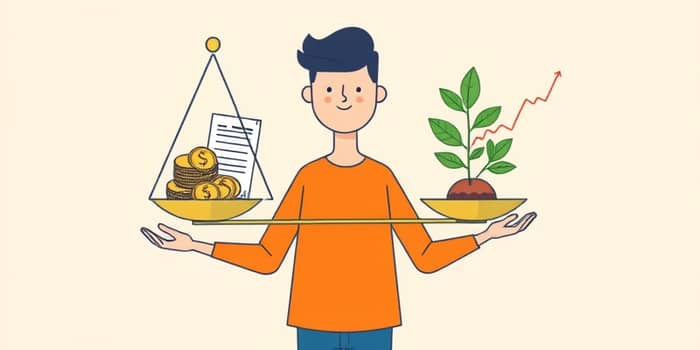
Achieving financial freedom often feels like an impossible dream when debt weighs you down.
Yet, many find themselves torn between paying off obligations and building wealth for the future.
The truth is, these goals are not mutually exclusive, and with the right approach, you can conquer both.
Imagine reducing financial stress while steadily growing your net worth over time.
This journey requires patience, strategy, and a clear understanding of your finances.
By embracing a balanced mindset, you can transform your money habits and secure a brighter tomorrow.
Debt repayment and wealth building can coexist through intentional planning.
Experts agree that focusing solely on one area may leave you vulnerable in the long run.
Automating savings through payroll deductions while using take-home pay for debt is a key strategy.
This dual approach ensures you are prepared for emergencies while steadily eliminating debt.
It protects your financial future by maintaining a cushion against unexpected costs.
Time is your greatest ally in this process, so starting early is crucial.
Paying off debt offers a guaranteed, immediate return through interest savings.
Investing, on the other hand, provides potential for higher long-term growth but comes with market risks.
High-interest debt repayment is mathematically similar to a risk-free investment.
This comparison helps prioritize where to allocate extra funds each month.
For instance, credit card debt often outpaces typical market returns.
Addressing it aggressively can be a smart and low-risk investment in itself.
Several methods can guide your decisions based on interest rates and psychological factors.
The Avalanche Method focuses on high-interest debt first to save money.
The Snowball Method prioritizes small balances for quick wins.
Interest rate thresholds play a key role in decision-making.
This balanced strategy helps manage multiple debts effectively.
Automation is your best friend in maintaining consistency.
Set up automated transfers to both debt and investment accounts monthly.
Small, consistent contributions compound over time, building wealth steadily.
A split cash flow approach ensures progress on all fronts.
Refinancing and consolidation can simplify your finances.
Even small extra payments can significantly impact debt payoff.
Tax-advantaged accounts are powerful tools for growth.
401(k)s and Health Savings Accounts offer efficient wealth building.
Tax benefits compound over time, even with long-term debt.
Diversification is key to managing risk and maximizing returns.
Expected returns should guide decisions; for example, if investments yield 15%-20%, paying off 5% debt may not be optimal.
An emergency fund acts as a buffer against unplanned expenses.
This cushion prevents you from falling back into high-cost debt.
Budgeting discipline is essential for tracking income and expenses.
Create clear budgets using apps or spreadsheets for organization.
Income enhancement can accelerate debt payoff when budgeting isn't enough.
Increasing minimum payments, even by small amounts, saves interest over time.
Consider psychological factors, as debt elimination reduces stress.
Investing during market downturns can increase anxiety but offers growth potential.
Credit score impact improves with high-interest debt repayment.
Wealth building has indirect positive effects on financial health.
Liquidity needs must balance present expenses with future goals.
Timeline alignment is crucial; retirement savings differ from short-term goals.
Use the table below to guide your prioritization based on debt types and interest rates.
This table helps visualize when to focus on debt versus investing.
Always tailor strategies to your personal financial situation.
Prioritize debt repayment in specific scenarios to avoid financial pitfalls.
Prioritize investing when conditions favor long-term growth.
This balanced approach ensures you are building wealth while managing obligations.
Balancing debt repayment and wealth building is a journey, not a destination.
By using strategic frameworks and practical steps, you can achieve both.
Remember, consistency and automation are key to long-term success.
Start today, assess your debts, and make a plan that works for you.
Financial freedom is within reach when you take control of your money.
References